
Reviewed · BELFAST BLACK TAXI & MURAL TOURS
2 Hour Terror and Mural History Belfast taxi Private Tour
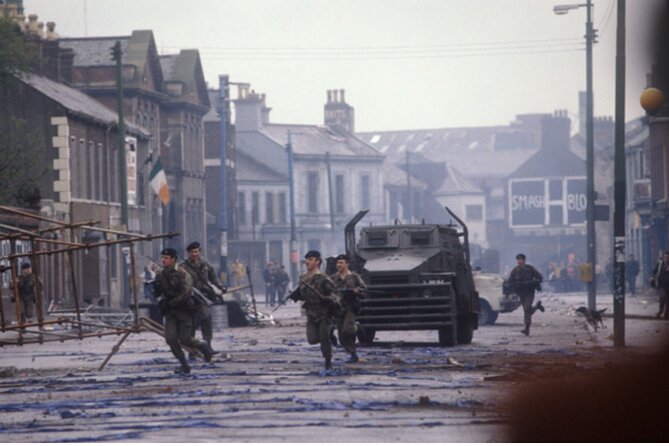
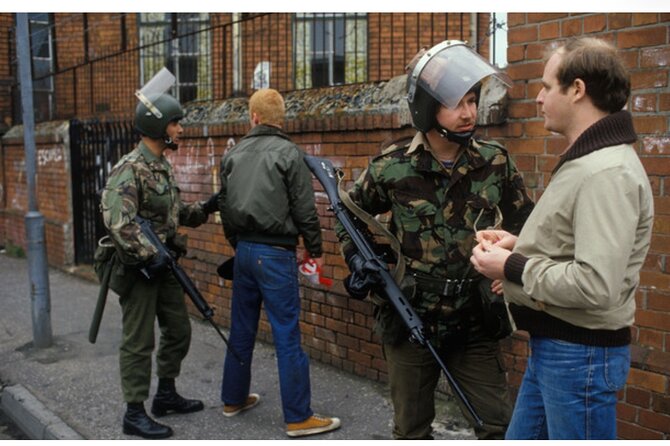
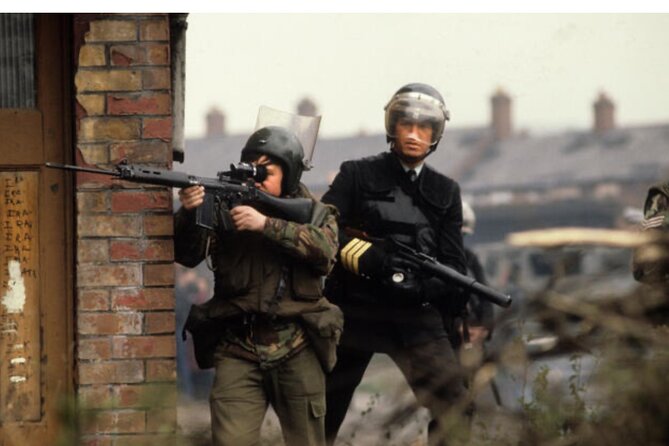
Belfast’s past is painted across its walls, but the murals make sense only when you know the streets behind them. This two-hour taxi tour connects the Peace Walls, Falls Road, Divis, Clonard, Bombay Street, Crumlin Road Gaol, and Shankill Road in one fast-moving lesson about the Troubles. A guide who was shot during the conflict has led this experience, adding a personal edge to the history.
I like the equal attention to both sides of the divide, from republican murals on Falls Road to loyalist murals on Shankill Road. I also like the efficient route: you cover a lot of ground without trying to walk several miles between neighborhoods. The main drawback is time. Two hours gives you a sharp introduction, not enough time for long stops, quiet reflection, or a full visit inside the gaol.
At about $190.59 per person, this is a costly short tour, especially for one or two people. It makes more sense if you value a private taxi format, personal explanation, and the chance to ask questions as you move through West and North Belfast.
Key points to know before booking
- The Peace Walls frame the whole tour: You see gates, barriers, murals, and neighborhoods still shaped by division.
- A guide with personal experience may lead the route: One guide connected with this tour was shot during the Troubles and presents both republican and loyalist viewpoints.
- You visit the Bobby Sands mural and International Wall: These are powerful political images, but they need context to avoid becoming mere photo stops.
- Clonard Monastery links street conflict with peace work: The monastery and Father Alec Reid’s role help explain how dialogue developed.
- The tour crosses both sides of Belfast’s divide: Falls Road and Bombay Street are followed by Shankill Road, offering a more balanced picture.
- The schedule is tight: The nine stops add up to about two hours, with most stops lasting 10 to 20 minutes.
Why the taxi format works in Belfast
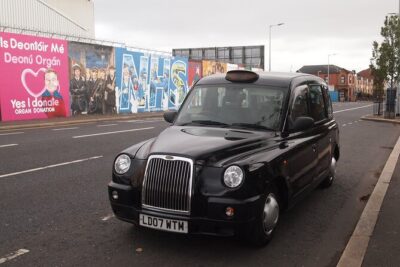
The great strength of this experience is movement. Belfast’s key Troubles sites are spread across different neighborhoods, and the taxi lets you shift from one community’s story to another without spending your limited sightseeing time on long walks.
You can ask questions in the vehicle, then get out for short visits and photographs. That matters here because the same event can look very different depending on the street where you hear about it. Bombay Street tells one story of displacement and defense. Shankill Road tells another story of loyalism, paramilitary organization, and fear.
The tour is offered in English, includes parking fees, and has a maximum group size of 25. The word private appears in the experience title, but the stated group limit means you should confirm the vehicle arrangement if having a fully exclusive taxi is important to you.
The start point is given as the Leonardo Hotel Belfast on Great Victoria Street. Pickup is also offered within a one-kilometer radius of Belfast City Hall. If you arrive by cruise ship, the operator does not collect directly from the ship because the port is several miles outside the city center. The cruise shuttle leaves you near Visit Belfast, across from City Hall, so you can request pickup at the City Hall front gates.
Other black taxi and mural tours:
- Cab Tours Belfast Famous Black Taxi Tours
★ 5.0 · 3,633 reviews - Private Black Taxi Belfast City Tour
★ 5.0 · 2,188 reviews - Belfast’s Political Mural Taxi Tour
★ 5.0 · 1,180 reviews
Peace Walls: the first lesson in separation
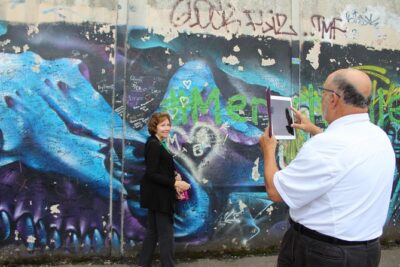
The Peace Wall is a strong opening because it puts the physical divide in front of you. These barriers were erected during the late 1960s, when sectarian violence was spreading through Belfast. Their original purpose was to separate mainly Protestant and Catholic neighborhoods and reduce attacks.
The walls stretch for several miles. Some gates still close at night, a plain reminder that the peace is not simply an old chapter in a history book. Murals and graffiti cover parts of the barriers, turning them into a public record of grief, politics, identity, and hope.
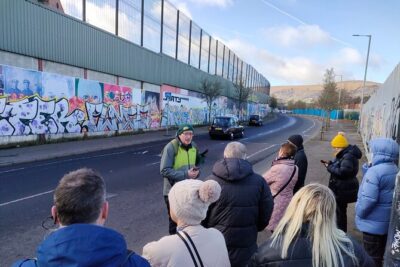
You get about 20 minutes here, with admission included. That is enough for an explanation and a look at the artwork, but not enough to study every mural. Listen for the guide’s account of how the barriers affected daily life. The wall is not only a photo backdrop. It shows how Belfast’s communities were physically organized around fear.
Divis Flats and the International Wall
The 10-minute stop at Divis Flats is brief but important. Built in the late 1960s, the flats became a center of conflict in a mainly Catholic part of West Belfast. A British Army post on the roof of the tallest building was known as Fort Apache, giving the residential complex a strong military presence and a clear symbol of surveillance.
This stop helps you understand why ordinary housing could become part of the conflict. The flats were not just buildings near the Troubles. Their residents lived with security forces above them and confrontation around them.
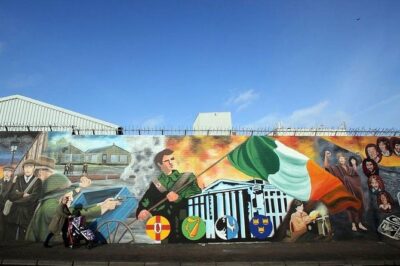
From there, the route reaches the International Wall on Divis Street, also described as the International Wall on Falls Road. You get another 10 minutes to look at murals dealing with Northern Ireland and wider struggles for human rights, peace, and political freedom.
The wall changes over time, so the exact images may differ. That is part of its character. The artwork is not a fixed museum display. It continues to express political views and community memory. Your guide’s explanation is especially useful here, since symbols can be easy to misread if you do not know the people and events they refer to.
Bobby Sands and the power of one mural
The Bobby Sands mural is one of Belfast’s best-known political images. It honors Sands, a Provisional IRA member who died during the 1981 hunger strike. During the strike, he was elected as a Member of Parliament, which made his death an international political event as well as a local one.
You have about 10 minutes at the mural. That is enough to understand why Sands became a republican symbol, but this is a place where careful wording matters. The mural reflects one side’s memory of the conflict and should not be treated as a complete account of the Troubles.
A strong guide will explain Sands’ political importance while also making clear that the Provisional IRA was an armed organization involved in violence. The tour’s stated aim of presenting both sides is valuable here. You can recognize the mural’s emotional force without accepting every political claim it represents.
More history walks in Belfast:
- A History of Terror – Belfast City Centre Walking Tour
★ 5.0 · 2,883 reviews - Private Political History & Murals Tour Belfast
★ 5.0 · 182 reviews - Belfast Political/history/troubles private taxi/cab tour
★ 5.0 · 69 reviews - 1 Hour Express Belfast Taxi/Cab Tour History, Murals, Troubles
★ 5.0 · 17 reviews
Clonard Monastery and the road to dialogue
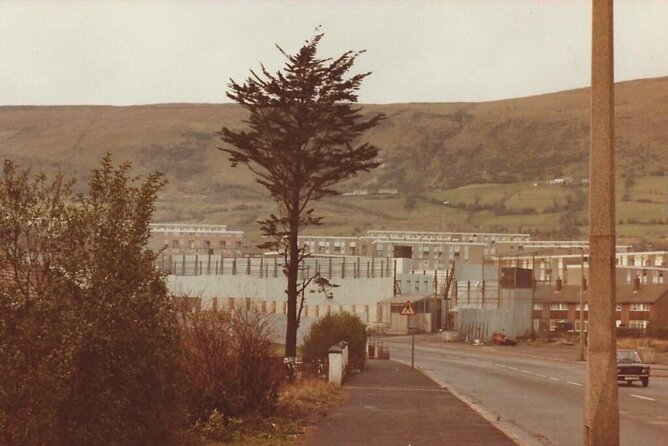
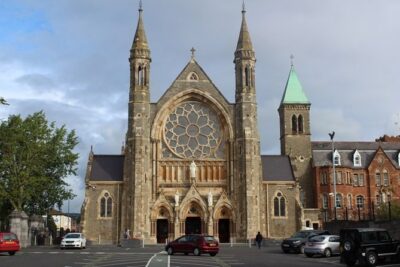
Clonard Monastery gives the tour a different tone. The red-brick church was founded in 1896 and became closely tied to peace efforts during the Troubles. Father Alec Reid, one of its priests, worked behind the scenes to open communication between opposing parties.
His efforts helped create dialogue that eventually contributed to the Good Friday Agreement in 1998. That does not make the monastery a place where the conflict was magically solved. It shows something more useful: peace often begins with quiet conversations that happen long before an agreement is signed.
The stop lasts about 10 minutes, followed by another 15 minutes at the Clonard Martyrs Memorial Garden. The garden honors local people who died during the Troubles, with plaques and memorials in a quiet setting beside the monastery.
I appreciate the pairing. The monastery points toward reconciliation, while the garden keeps the human cost in view. You are not asked to treat peace as an abstract political success. You are reminded that local families paid for the conflict in personal loss.
The schedule allows some reflection, but not a long visit. If you want time for prayer, detailed reading, or a slow look at the memorials, two hours may feel hurried.
Crumlin Road Gaol and the machinery of conflict
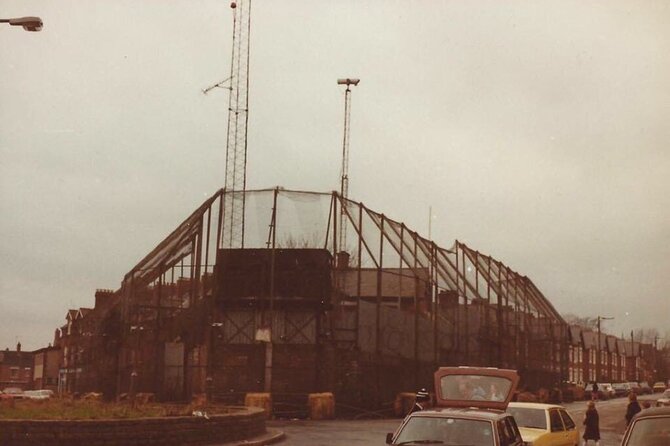
Crumlin Road Gaol receives only 10 minutes on this tour, and admission is listed as free. The former prison and adjoining courthouse are closely linked to the Troubles. The gaol held criminal and political prisoners from republican and loyalist groups, while the courthouse handled major trials connected to the conflict.
The tunnel between the prison and courthouse is one of the site’s most telling features. It shows the direct route prisoners took from confinement to court, bringing the legal system and the prison system into one physical story.
Escapes, hunger strikes, and riots also form part of the gaol’s past. A 10-minute exterior or orientation stop cannot replace the longer guided visit available at the restored prison, but it gives you a useful sense of the building’s role.
If Crumlin Road Gaol is your main reason for booking, this tour may not give you enough time. If you want to understand how the prison fits into a wider Belfast route, the short stop works well.
Bombay Street and the birth of the Provisional IRA
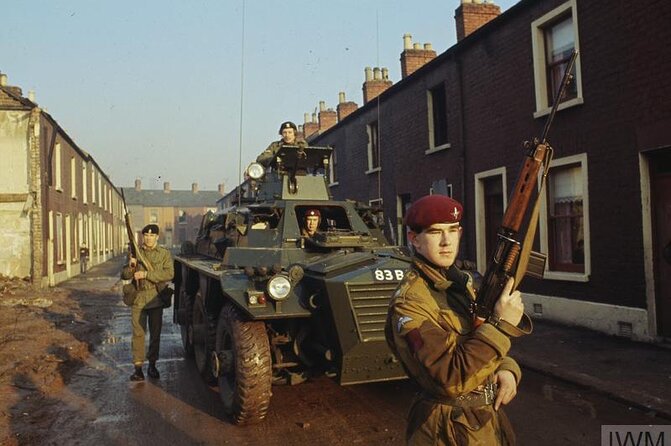
The Belfast Peace Lines stop includes Bombay Street, a key site in the events of 1969. Sectarian riots led to homes being destroyed and Catholic families being displaced. Many residents felt abandoned by the state and by the existing IRA structures.
In response, a faction broke away and formed the Provisional Irish Republican Army. Its stated goals included defending nationalist communities and pursuing Irish reunification through armed resistance.
You get about 15 minutes here. Memorials and restored homes help you connect the political story to the people who lived through it. This is one of the most important stops for understanding why the Provisional IRA gained support in parts of West Belfast, even though its campaign also produced violence and loss.
The wording used at this stop matters. A thoughtful explanation should cover both the sense of danger felt by nationalist residents and the consequences of armed action. The personal account available from one guide, who was shot during the Troubles, may make this part especially direct.
Shankill Road and the loyalist view
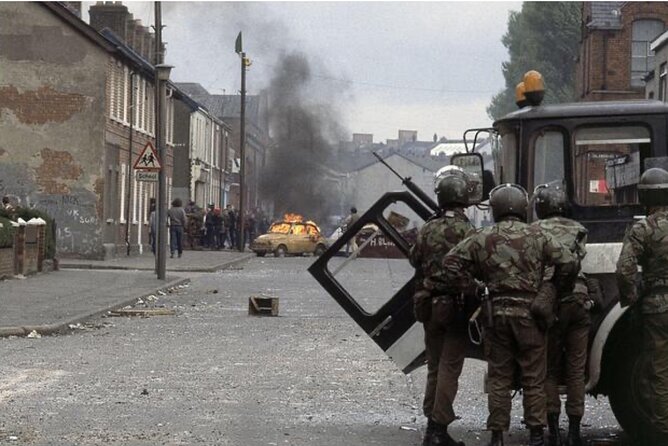
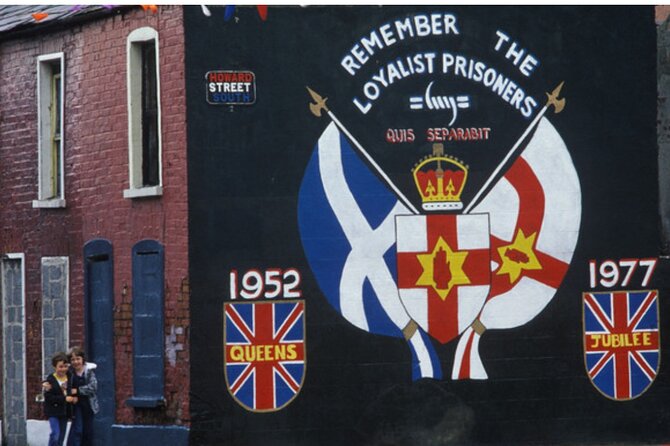
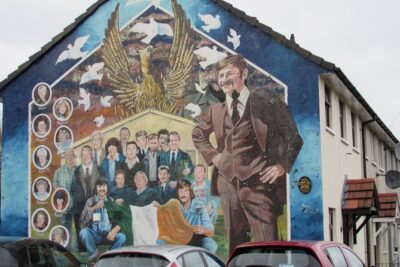
The final 20-minute stop takes you to Shankill Road, a loyalist area with murals tied to the Ulster Volunteer Force and the Ulster Freedom Fighters. These groups supported Northern Ireland remaining part of the United Kingdom and carried out violent campaigns during the conflict.
The murals commemorate loyalist figures, events, symbols, and ideals. They offer a counterpoint to the republican images on Falls Road and around Bombay Street. Seeing both areas in one tour is one of the strongest reasons to choose this route.
You do not need to agree with the political messages to learn from them. Look at the murals as statements of identity and memory. Ask what each community wanted remembered, and what it leaves out. That habit will help you read Belfast’s political art with more care.
Shankill Road is also a useful final stop because it prevents the tour from presenting West Belfast as the entire story. The Troubles divided neighborhoods on both sides, and both communities experienced fear, grief, recruitment, and political pressure.
What $190.59 buys you
At $190.59 per person, the price is high for two hours. There are no drinks included, and no paid attraction is listed as part of the experience beyond the included admission at the Peace Wall. Parking fees are covered.
The value comes from the route and the guide rather than tickets. You are paying to connect nine difficult sites in a short time, hear explanations while moving between them, and ask questions in a small vehicle setting. A guide with direct experience of the conflict can add something that a sign or mural cannot.
The price is easier to justify for a group sharing the taxi than for a solo booking. Since the maximum group size is 25, confirm whether your booking is exclusive before paying if that affects your decision. The experience is rated five out of five from seven ratings, with especially strong praise for punctuality, a clean car, detailed facts, and a balanced presentation.
Who will get the most from this tour
I would choose this for a first visit to Belfast if the Troubles are central to your interests. It gives you the basic geography quickly: republican West Belfast, loyalist Shankill Road, memorial sites, prison history, and the physical barriers that still shape parts of the city.
It also suits anyone studying Northern Ireland, modern politics, peace processes, or public memorials. One participant used the material for an important paper, which makes sense given the number of political and historical reference points covered.
You should think twice if you want a relaxed sightseeing ride. The subject is grim, the pace is quick, and several stops last only 10 minutes. You should also look elsewhere if your main goal is a full interior tour of Crumlin Road Gaol or a long walk through the mural districts.
Free cancellation is available if you cancel at least 24 hours before the local start time. Changes made within 24 hours are not accepted, so check your plans carefully before the cutoff.
Should you book the Belfast taxi tour?
Book it if you want a direct introduction to Belfast’s divided neighborhoods and prefer a guide to explain the political meaning behind the murals. The route is well chosen, the cross-community viewpoint is important, and the guide’s possible personal experience can bring unusual weight to the conversation.
Skip it if $190.59 per person feels too steep for a two-hour ride, or if you want long visits inside individual sites. For the right audience, this is not a light city tour. It is a compact, serious history lesson that helps you read Belfast’s streets with greater care.
FAQ
How long does the Belfast taxi tour last?
The experience lasts approximately two hours.
Where does the tour start?
The listed start point is the Leonardo Hotel Belfast on Great Victoria Street, Belfast BT1 6DY.
Is pickup available?
Yes. Pickup is offered within a one-kilometer radius of Belfast City Hall.
Can the tour collect cruise ship passengers?
Direct pickup from cruise ships is not offered because the port is several miles outside Belfast city center. The cruise shuttle bus leaves passengers near Visit Belfast, across from City Hall, where pickup can be arranged at the front gates.
What language is the tour offered in?
The tour is offered in English.
What sites are included?
The route includes the Peace Wall, Divis Flats, the International Wall, the Bobby Sands mural, Clonard Monastery, Clonard Martyrs Memorial Garden, Crumlin Road Gaol, Bombay Street, and Shankill Road.
Are admission fees included?
Admission is included for the Peace Wall. The other listed stops have no admission fee shown.
Are food and drinks included?
No. Coffee, tea, and alcoholic beverages are not included.
How many people can join?
The activity has a maximum group size of 25 people.
What is the cancellation policy?
You can cancel at least 24 hours before the experience start time for a full refund. Cancellations or changes made less than 24 hours before the start are not accepted for a refund.
More Two-Hour Tours in Belfast
- 2 Hour Private Belfast Taxi Cab Tour of Troubles & Peace walls
★ 5.0 · 240 reviews - 2 hours Belfast Original Drivers The Troubles Black Taxi Tour
★ 5.0 · 227 reviews - World Famous Belfast City Centre Black Cab/Taxi Tour 2 Hours
★ 4.5 · 177 reviews - Original Private Belfast Troubles and Peace Cab/Taxi Tour 2 Hours
★ 5.0 · 90 reviews
Just added around Belfast
- Belfast history of terror & mural 1 hr express private taxi tour★ 5.0 · 3 reviews
- Game of Thrones scene location inc Giants causeway from Belfast★ 5.0 · 3 reviews
- Giants Causeway Tour From Belfast including Game of thrones sites★ 5.0 · 3 reviews
- Experience the Antrim Coast and the Land of Giants – Private Tour★ 5.0 · 3 reviews
- Belfast & Giants Causeway Luxury Mercedes Private Tour for 6 pax★ 5.0 · 3 reviews
- Belfast to Dublin Transfer★ 5.0 · 3 reviews
- Private Coast Tour in Belfast★ 5.0 · 3 reviews
- Belfast City Airport (BHD) to Belfast Accommodation – Arrival Private Transfer★ 5.0 · 3 reviews
Belfast Black Taxi & Mural Tours, compared.
Cab Tours Belfast Famous Black Taxi Tours
See the full review →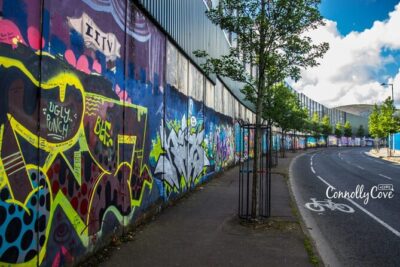
Browse the lists this tour appears in