
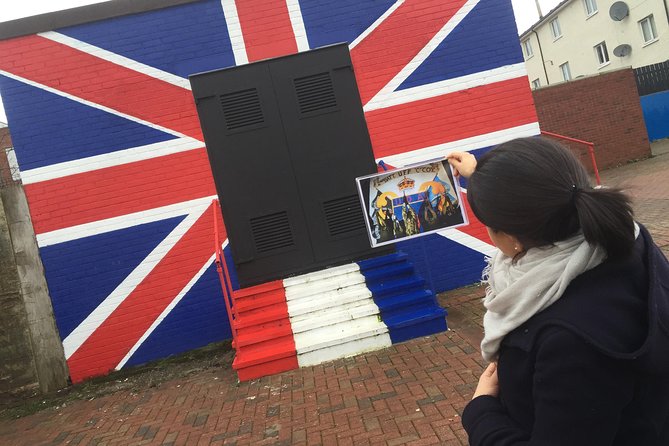
Reviewed · BELFAST BLACK TAXI & MURAL TOURS
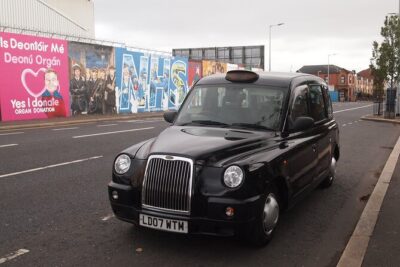
Belfast history of terror & mural 1 hr express private taxi tour
Belfast’s black taxi tour takes you into streets where the Troubles were not a chapter in a history book, but daily life. A local driver such as Tony or Danny guides you through Falls Road, Shankill Road, Divis, and the peace walls, adding personal memories to the murals and political symbols.
I like the private format, since you can ask direct questions without sharing the cab with strangers. I also like the way the tour links the images on the walls to real places, communities, and events. The main drawback is time: one hour is tight for this much ground, and the tour can feel rushed if you want long stops or detailed discussion.
Key points to know before booking
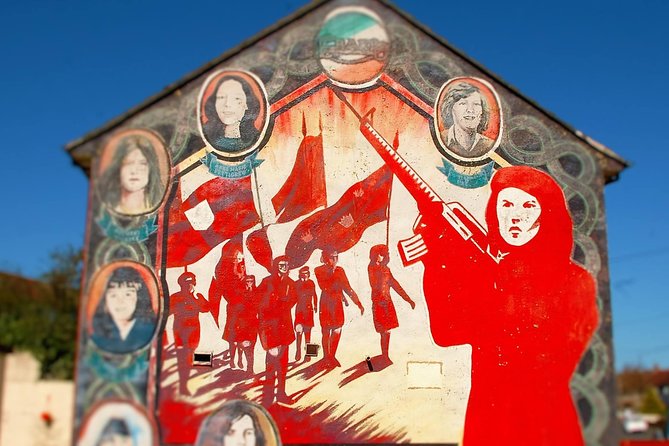
- Local black cab guides: Tony and Danny are named guides connected with firsthand knowledge of Belfast during the Troubles.
- Republican and loyalist areas: The route includes Falls Road, Shankill Road, Divis, and communities separated by peace walls.
- Murals with political meaning: You see the Bobby Sands mural, IRA and UVF references, and an international mural wall featuring causes such as Palestine and Cuba.
- Private for your group: You do not share the taxi with other groups, making questions and conversation easier.
- Fast, focused format: The advertised tour lasts about one hour, with several brief stops.
- City-center pickup: Pickup is offered within 1 kilometer of Belfast City Hall, while airport, rail, and cruise-port pickups cost extra.
Why Belfast’s black cab tours matter
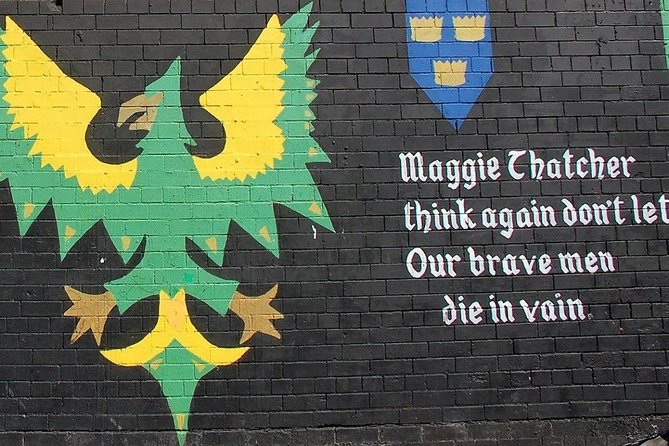
Belfast has plenty of ordinary city pleasures, including shops, cafés, and pubs. This tour takes you somewhere else entirely. It shows you the streets where Catholic and Protestant communities lived close together but remained sharply divided during decades of violence.
The black taxi is part of the point. During the Troubles, taxi drivers often had to move people through areas affected by gunfire, bombs, roadblocks, and sudden unrest. Guides who lived through that period can explain the city in a way a passing sightseeing bus usually cannot.
That does not make every story simple. The route deals with the Provisional IRA, the UVF, the UFF, British security forces, republicanism, loyalism, nationalism, and unionism. You will hear views shaped by the guide’s own background. Ask questions, listen carefully, and remember that one person’s account cannot represent every family or community in Belfast.
The private setup helps. You can pause to ask what a mural means, why a wall was built, or how a neighborhood changed after the peace process. With only an hour, you will not learn everything, but you can get a clear sense of why Belfast’s political geography still matters.
Other black taxi and mural tours:
- Cab Tours Belfast Famous Black Taxi Tours
★ 5.0 · 3,633 reviews - Private Black Taxi Belfast City Tour
★ 5.0 · 2,188 reviews - Belfast’s Political Mural Taxi Tour
★ 5.0 · 1,180 reviews
Falls Road and the Bobby Sands mural
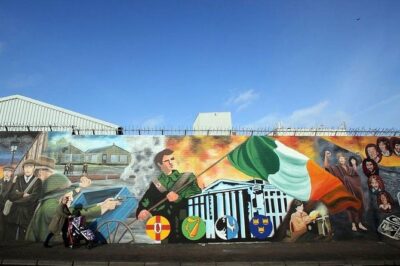
The tour begins or spends an early section on Falls Road, the main road through west Belfast. Its name is closely linked with the republican and nationalist Catholic community. The neighboring Shankill Road is mainly associated with loyalism and unionism, with peace lines separating the two areas in places.
The Bobby Sands mural is one of the most recognizable images on the route. Sands was a Provisional IRA member who died during the 1981 hunger strike while imprisoned. His face has become an international symbol connected with republican history, political imprisonment, and the conflict in Northern Ireland.
You get about 10 minutes at this stop. That is enough to see the mural and hear its basic context, but not enough for a long historical discussion. If the guide has time, ask how local people view the mural today. It is not simply decorative street art. It is a political memorial in a living neighborhood.
The Falls Road itself is useful context. Look beyond the best-known painting. The road, side streets, flags, memorials, and community symbols show how identity is marked in Belfast. The guide’s role is to connect those visible signs with the people and events behind them.
The peace wall and Belfast’s divided streets
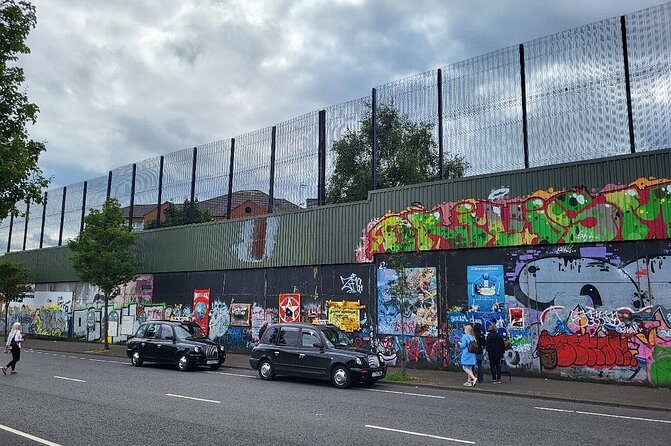
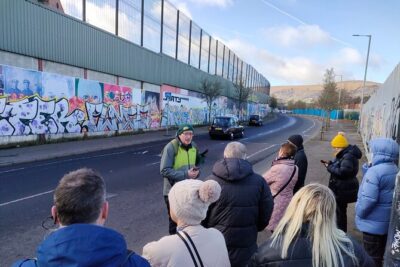
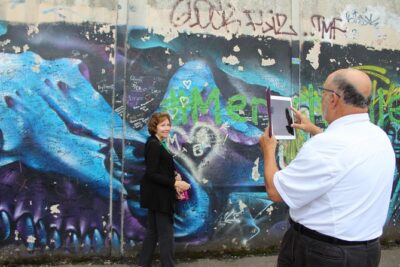
The peace walls are among Belfast’s most striking features. They separate areas that are mainly republican and nationalist Catholic from areas that are mainly loyalist and unionist Protestant. Some barriers are short, while others extend for miles. They can be made from different materials and may include gates, murals, or messages.
The name can sound hopeful, but the walls were built to reduce violence, not to create a pleasant civic attraction. Their purpose was to limit contact in places where clashes were likely. Some remain because residents still believe they provide safety, even though the conflict has changed.
You have roughly 10 minutes here. That gives you time to see the barrier and understand its role, but it is not a long walk or a full examination of Belfast’s peace-building work. The taxi format is useful because you cover more than you would on foot, though you should expect brief roadside stops rather than a leisurely visit.
This is also a good point to ask about the difference between nationalism and unionism. Nationalists generally identify as Irish and may support a united Ireland. Unionists generally identify as British and support Northern Ireland remaining part of the United Kingdom. Those broad labels do not explain every person, but they help you follow the guide’s account.
Republican memorials on the side streets
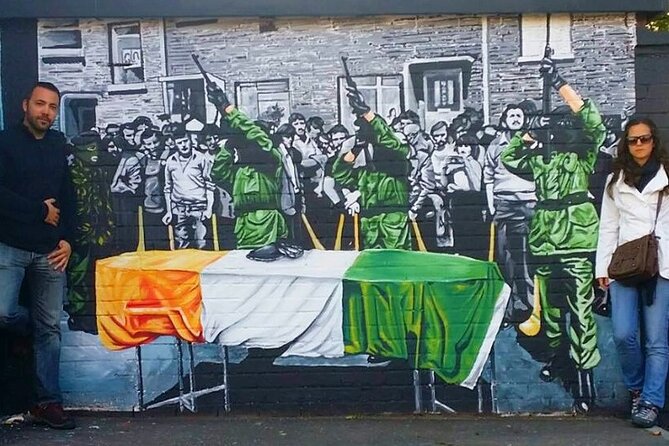
One stop focuses on a memorial created by the local community for IRA volunteers and civilians who died in the surrounding streets. It is a reminder that the conflict affected residents, families, and neighborhoods, not only armed organizations and political leaders.
Expect a short visit and a direct explanation. The memorial may feel more intimate than the large murals on the main roads because it is tied to local names and local loss. If you want to understand how memory works in Belfast, pay attention to who is remembered, who is not named, and how the memorial is presented.
This part of the tour can be emotionally difficult. The experience does not treat the past as a neat story with one side entirely right and the other entirely wrong. You will see memorials that honor people some communities viewed as freedom fighters and others viewed as terrorists. A respectful question is fine. A glib one is not.
More history walks in Belfast:
- A History of Terror – Belfast City Centre Walking Tour
★ 5.0 · 2,883 reviews - Private Political History & Murals Tour Belfast
★ 5.0 · 182 reviews - Belfast Political/history/troubles private taxi/cab tour
★ 5.0 · 69 reviews - 1 Hour Express Belfast Taxi/Cab Tour History, Murals, Troubles
★ 5.0 · 17 reviews
Shankill Road and loyalist Belfast
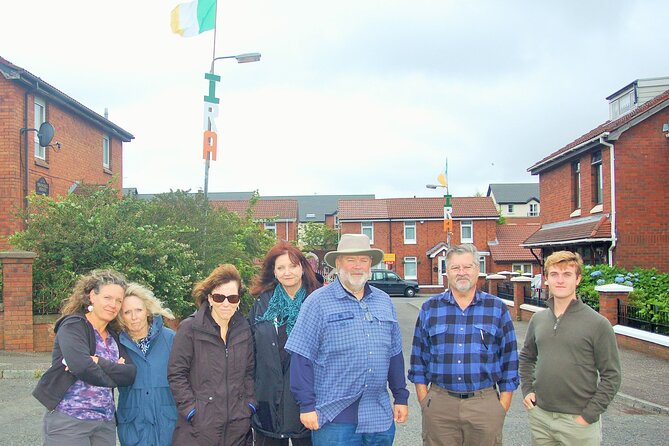
Shankill Road is the main loyalist counterpart to Falls Road. The road is described as dating back to 455 AD and is regarded as one of Belfast’s oldest roads. On this part of the route, the guide explains British history, the formation of Northern Ireland, and the loyalist tradition.
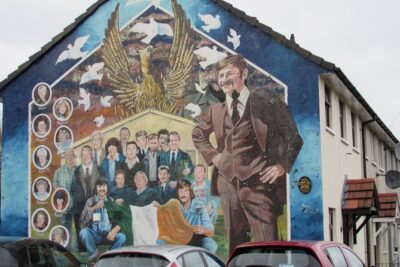
The area is also associated with the origins of the UVF and UFF. Murals and flags here reflect a British and unionist identity, just as republican images on Falls Road reflect an Irish and nationalist identity. Seeing both roads in one short tour helps you understand that Belfast’s conflict was not confined to one neighborhood or one political viewpoint.
The scheduled stop lasts about 15 minutes, making it the longest listed stop. That extra time matters. Shankill Road contains many layers, and the guide may explain the symbols painted on walls, the meaning of local memorials, and the reasons the area has remained politically important.
Do not expect a neutral, academic lecture in a museum setting. This is a cab ride through a community, led by someone who may have personal memories of the period. Tony is described as balancing political history with questions, while Danny is described as having lived through the Troubles and explaining the area in an informative way. If you want a calm exchange, let the guide set the pace and ask for clarification rather than trying to force a debate.
Divis Flats and the start of Falls Road
Divis is tied closely to the history of the Troubles. The Divis Flats area saw gun battles, and the tower block was occupied by the British Army from the 1970s until 2007. The army used the top three floors, giving the building a highly visible role in the security history of west Belfast.
The listed stop lasts about five minutes. That is enough to point out the location and explain why it mattered, but you will not have time to explore the area in detail. The value comes from seeing the physical setting linked to the stories you have already heard.
Divis also marks the start or mouth of the famous Falls Road. From the taxi window, you begin to see how geography, housing, security, and political identity were bound together. This is one reason a car tour works well here. You can connect several areas quickly without trying to work out the route on your own.
International murals on Divis Street
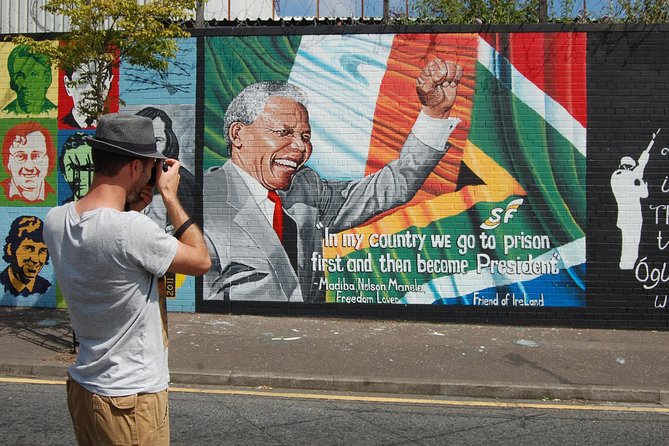
The International Mural Wall on Divis Street shifts the focus from local politics to global struggles. Murals here highlight injustice and movements for freedom, with examples linked to Palestine and Cuba.
This wall shows how Belfast’s mural tradition grew beyond local memorials. The paintings are not just decoration. They place Northern Ireland’s political story alongside causes from other parts of the world, often presenting a shared language of resistance and self-determination.
The stop is listed at about five minutes. You can take in the main images and ask the guide to explain the connections, but you should not expect a full art-history tour. If murals are your main interest, this express trip may leave you wanting more time on foot.
Still, the international wall adds balance to the route. It shows that Belfast’s murals do not all tell the same story. Some honor local dead, some mark territory, some express political loyalty, and others connect the city with wider causes.
The historic church and secret peace talks
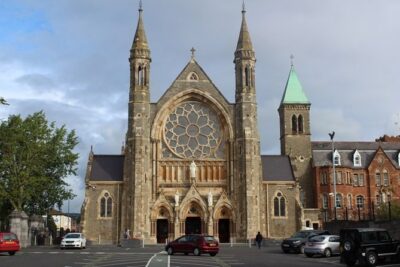
Another stop features a church built in the 1800s. The building is noted for its fine craftsmanship, created through the work of Italian and local men more than a century ago. It is also connected with the early secret peace talks involving Gerry Adams of Sinn Féin and John Hume of the SDLP.
You can ask the guide to stop and show you inside. That is worth requesting if the timing works, since the interior may offer a calmer contrast to the political murals and memorials outside. The supplied details do not guarantee that an interior visit will be possible on every departure, so treat it as an option rather than a fixed part of the hour.
This stop gives the tour an important change of tone. Belfast’s story is not only about violence and division. Churches, community buildings, local organizers, and private conversations also played a role in moving the city toward peace.
The old jail and stories of escape
The route also passes an old jail built in the 1800s. It held notable prisoners during the Troubles, saw successful escapes, and continued to operate as a hanging jail into the 1960s.
The supplied information does not give the prison’s name, so you should ask the guide to identify it and explain which prisoners and escapes are being discussed. The stop appears to be a quick point of interest rather than a full prison visit.
That distinction matters. You are buying a moving history lesson from the taxi, not entry to a museum or a guided jail tour. The guide can place the prison in the wider story of law, punishment, political imprisonment, and the Troubles, but you should not plan on spending extended time inside.
How much can one hour really cover?
The advertised duration is about one hour. The route includes Falls Road, the Bobby Sands mural, a peace wall, a republican memorial, Shankill Road, Divis, the International Mural Wall, a historic church, and an old jail. That is a lot for a short ride.
The practical result is a fast overview. You will see many important places and hear the main political background, but most stops are measured in five to 15 minutes. The tour is best for getting your bearings and deciding which parts of Belfast you want to study more closely later.
One past booking lasted 90 minutes, and another guide continued beyond the planned hour. That suggests some guides may be generous with their time, but you should not count on overtime. Plan your day around the stated one-hour duration.
The private format is particularly helpful here. If you have only a short window in Belfast, you can cover ground quickly and ask about the exact subjects that interest you. A shared tour might be cheaper per person, but it would give you less control over the conversation.
Price, pickup, and practical value
The listed price is $164.24 per person. That is a high cost for an hour if you judge the experience only by duration. For a private group, though, the value depends on how many people share the booking and how much you care about personal explanation.
You receive pickup within a 1-kilometer radius of Belfast City Hall. Airport, train-station, and cruise-port pickup is not included, and any surcharge must be paid in cash on the day. Check this point before booking if you are arriving with luggage or coming from a ship.
The tour offers a mobile ticket, and confirmation is provided when you book. Children must be accompanied by an adult. Service animals are allowed, and most people can participate. The tour operates near public transportation, which helps if your pickup point falls outside the included center area.
Free cancellation is available if you cancel at least 24 hours before the local start time. Cancellations or changes made inside that window are not refunded or accepted.
Who should book this Belfast tour?
I would choose this tour if you want a direct introduction to the Troubles and prefer a local cab driver over a formal museum presentation. It suits first-time visitors, history-minded adults, families with older children, and anyone with limited time who wants to see both republican and loyalist areas.
It is also a good choice if you want to ask personal questions. Tony and Danny are named as guides associated with the experience, and the strongest part of the format is the chance to hear a guide who lived through the conflict.
I would hesitate if you want a long walking tour, quiet time at each mural, or a carefully neutral academic treatment. The subject is politically charged, the hour is short, and the guide’s personal perspective will shape the presentation.
Should you book the one-hour black taxi tour?
Book it if you want Belfast’s divided streets explained by someone who knows the city from personal experience. The Bobby Sands mural, peace wall, Shankill Road, Divis Flats, and international murals form a powerful introduction to the city’s recent past.
Before paying, decide if the private format fits your group and ask about the exact pickup point. If you can afford the price and have only an hour, this is a strong use of limited time. If you have a full day and want detailed visits inside historic sites, use this as a starting point rather than your only Belfast history experience.
FAQ
How long does the Belfast black taxi tour last?
The advertised duration is approximately one hour. Some guides may continue longer, but overtime is not guaranteed.
Is the tour private?
Yes. Only your group participates in the private tour or activity.
Where is pickup included?
Pickup is offered within a 1-kilometer radius of Belfast City Hall in the city center.
Can I be picked up at the airport, train station, or cruise port?
Those pickup locations are not included. A surcharge applies, and it must be paid in cash on the day.
Which Belfast areas are included?
The route includes Falls Road, Shankill Road, Divis, the peace walls, the Bobby Sands mural, and the International Mural Wall on Divis Street. It also includes stops connected with a historic church and an old jail.
Will I see murals connected with both sides of the conflict?
Yes. The tour covers republican murals and memorials around Falls Road, as well as loyalist murals and history around Shankill Road. The guide explains the political background of both traditions.
Can I ask to see inside the historic church?
You can request that the guide stop and show you inside. The interior visit is an option, not a guaranteed scheduled stop.
What is the cancellation policy?
You can cancel for a full refund up to 24 hours before the experience start time. Cancellations or changes made less than 24 hours in advance are not accepted or refunded.
Just added around Belfast
- Game of Thrones scene location inc Giants causeway from Belfast★ 5.0 · 3 reviews
- Giants Causeway Tour From Belfast including Game of thrones sites★ 5.0 · 3 reviews
- Experience the Antrim Coast and the Land of Giants – Private Tour★ 5.0 · 3 reviews
- Belfast to Dublin Transfer★ 5.0 · 3 reviews
- Private Coast Tour in Belfast★ 5.0 · 3 reviews
- Belfast & Giants Causeway Luxury Mercedes Private Tour for 6 pax★ 5.0 · 3 reviews
- Belfast City Airport (BHD) to Belfast Accommodation – Arrival Private Transfer★ 5.0 · 3 reviews
- Belfast Private Walking Tour with a Local★ 3.0 · 3 reviews
Belfast Black Taxi & Mural Tours, compared.
Cab Tours Belfast Famous Black Taxi Tours
See the full review →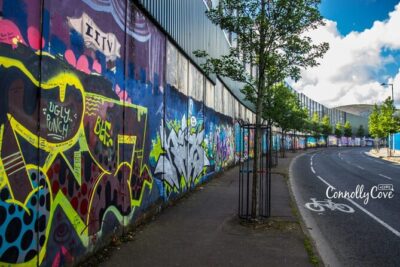
Browse the lists this tour appears in