
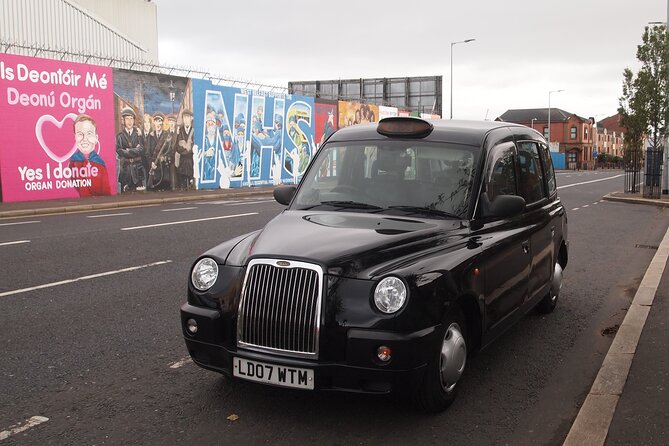
Reviewed · BELFAST BLACK TAXI & MURAL TOURS
Iconic Belfast Black Cab Tour
Belfast’s murals are not just public art. They are political statements, memorials, warnings, and records of lives shaped by conflict. This private black cab tour takes you through west Belfast, across the interface between communities, and along Shankill Road while guide Hugh Jordan explains what you are seeing and why it matters.
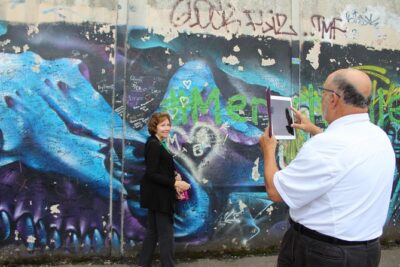
I like the private format, which lets you ask direct questions without holding up a larger group. I also like the chance to sign the Peace Wall, if you wish. The main consideration is that this is a serious tour about sectarian conflict, death, hunger strikes, and continuing division. It can be moving, and it is not designed as a light sightseeing ride.
Key points about the Belfast black cab experience
- Hugh Jordan’s personal storytelling: Expect a local guide who explains the Troubles in a balanced way and adds stories from his own experience.
- Five focused stops: The route includes Divis Street, the International Mural Wall, the Peace Wall, Bobby Sands’ mural, and Shankill Road.
- A private cab for up to two people: You get the driver’s attention and can shape the conversation around your own questions.
- Two sides of Belfast’s divide: The tour shows both republican and loyalist areas rather than presenting only one view.
- A chance to sign the Peace Wall: You can leave your name at this powerful symbol of Belfast’s still-divided communities.
- A practical 90-minute introduction: The tour gives you a strong first look at west Belfast without taking up half a day.
What this tour helps you understand about Belfast
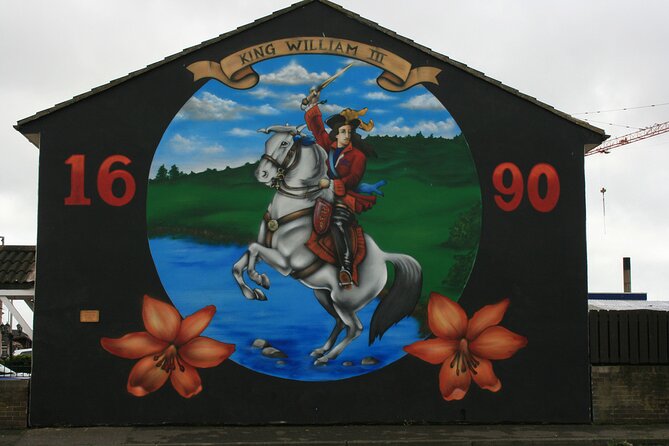
A black cab is a useful way to see Belfast’s political murals because the vehicle takes you directly into neighborhoods that can be difficult to understand from a standard city-center walk. You are not simply looking at painted walls. You are hearing why particular figures, flags, dates, and slogans appear there.
The Troubles were a period of conflict in Northern Ireland that lasted from the late 1960s until the peace process of the 1990s. The conflict involved questions of national identity, British and Irish sovereignty, civil rights, religion, and political control. Communities were often divided along Catholic and Protestant lines, though the political labels are more precise: many Catholics identified as nationalists or republicans, while many Protestants identified as unionists or loyalists.
The route gives you a chance to see both sides of that divide. You will visit the Falls area and the republican murals around Divis Street, then move toward the loyalist murals on Shankill Road. The point is not to tell you which community is right. It is to show how each side remembers its own dead, honors its own leaders, and presents its own account of the past.
That balance is one of the tour’s strongest qualities. Hugh is repeatedly praised for keeping his explanations factual and nonpartisan while still making the subject understandable. He asks questions during the tour rather than delivering a long speech without pause, which helps you think through the issues instead of simply memorizing dates.
Other black taxi and mural tours:
- Cab Tours Belfast Famous Black Taxi Tours
★ 5.0 · 3,633 reviews - Private Black Taxi Belfast City Tour
★ 5.0 · 2,188 reviews - Belfast’s Political Mural Taxi Tour
★ 5.0 · 1,180 reviews
Divis Street and Divis Tower: starting in west Belfast
The first stop is Divis Street, near Divis Tower. You have about 10 minutes here, enough time to get out, look around, and begin placing the area in context.
Divis Tower is an important visual marker in west Belfast. It rises above a neighborhood closely linked with the republican community, and its presence helps you understand the physical setting before you start studying the murals. The stop is brief, but it gives Hugh room to explain how the area was affected by unrest and how local identity developed.
I like beginning here because the tour does not drop you beside a mural and rush straight into symbolism. You first get a sense of the neighborhood itself. You can also use this opening stop to tell Hugh what you already know and what you hope to learn.
The tour is offered in English, and a good level of English is required. That matters here. Hugh’s explanations depend on political terms, personal stories, and careful distinctions, so you will get more from the experience if you are comfortable following a detailed conversation.
The International Mural Wall: art with a political purpose
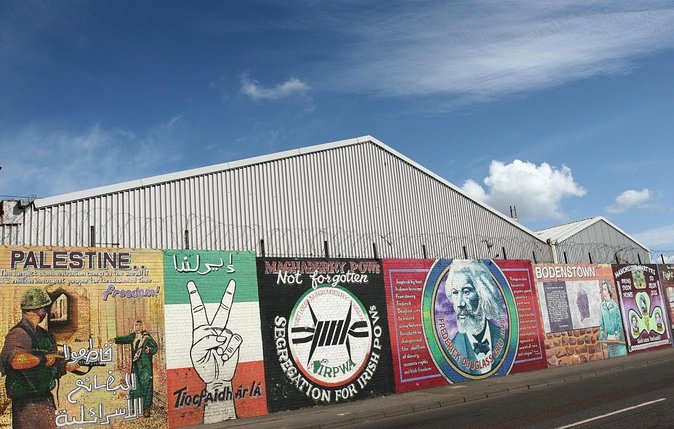
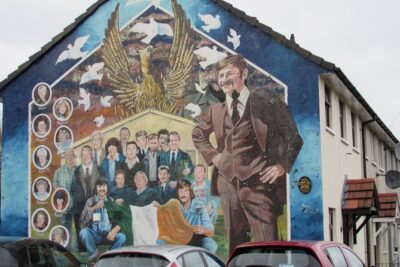
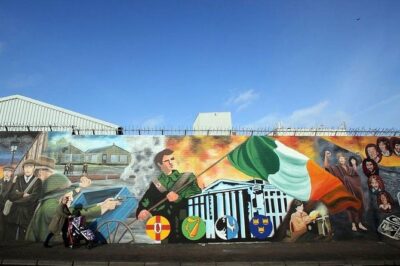
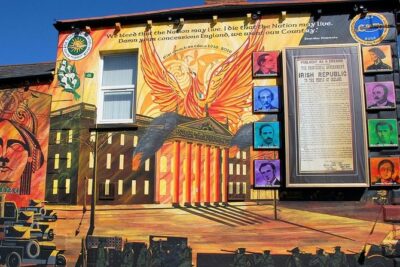
Next comes the International Mural Wall on Divis Street, with around 10 minutes to view the paintings. The murals include local and international themes, showing how Belfast’s political art has connected the city’s own struggles with causes and movements around the world.
This is a good place to slow down and look closely. The artwork can be visually striking, but the meaning is more important than the color or scale. Hugh explains the people and events represented, helping you separate a general peace message from a specifically republican reference.
The route does not treat murals as neutral decoration. Some are memorials. Some support political campaigns. Some honor hunger strikers or people killed during the conflict. Others express solidarity with international causes. You will find that the same wall can work as both art and public argument.
A short stop also means you will not have unlimited time to inspect every image. If you are deeply interested in mural art, you may want to note the locations and return later on foot. The strength of the cab tour is the explanation that comes with each stop, not extended time for photography.
The Peace Wall: seeing an interface that still matters
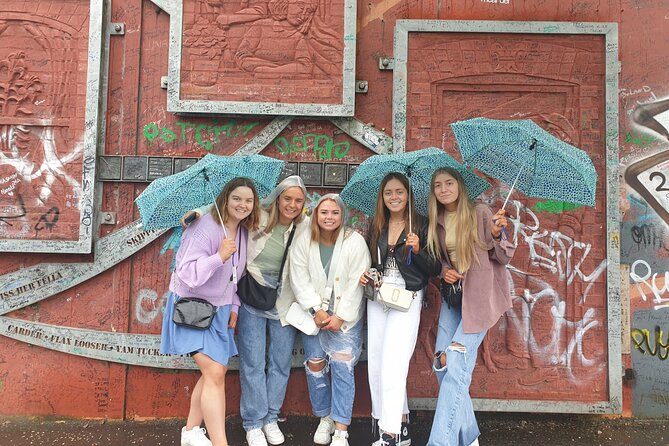
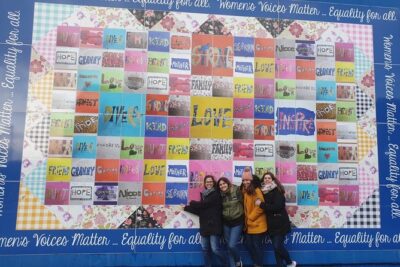
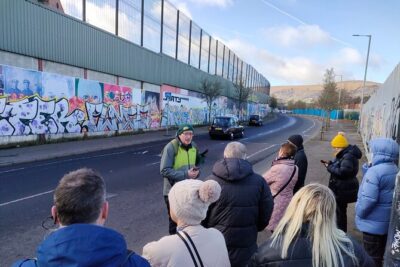
The Peace Wall is the emotional center of the route. You stop along the Belfast interface for about 10 minutes, and you may sign your name if you wish.
The wall was built to separate communities and reduce violence, but its continued presence also shows that peace and full integration are not the same thing. It is easy to think of the wall as a historical relic. Hugh’s explanation helps you understand that it remains part of the city’s present-day reality.
Signing the wall is optional. I would treat it as a personal choice, not a required ritual. Some people find it meaningful to add a message of peace. Others may prefer to look, listen, and leave the wall untouched. Both responses are reasonable.
This stop can feel unexpectedly heavy. You are standing beside a physical barrier created because people living close to each other could not safely share the same streets. The experience is worth approaching with respect, especially if you are traveling with children or anyone sensitive to political violence.
A few more Belfast half-days to weigh up
- From Belfast: Giant’s Causeway Full-Day Guided Trip
★ 4.8 · 6,361 reviews - Titanic Belfast Entrance Ticket: Titanic Visitor Experience Including SS Nomadic
★ 4.5 · 3,698 reviews - A History of Terror – Belfast City Centre Walking Tour
★ 5.0 · 2,883 reviews - Game of Thrones and Giant’s Causeway Full-Day Tour from Belfast
★ 5.0 · 2,291 reviews
Bobby Sands’ mural and the hunger strike memorial
The Bobby Sands mural is the next stop, with about 10 minutes to take in the Sinn Féin building and hunger strike memorial.
Bobby Sands was a republican prisoner who died during the 1981 hunger strike. His image has become one of the best-known symbols associated with the republican movement. The mural is visually simple compared with some of the larger painted walls, but its political and emotional weight is considerable.
Hugh’s role here is especially important. A brief stop can easily turn into a simplified story about heroism on one side and wrongdoing on the other. The better approach is to understand how the hunger strike was viewed by republican supporters, by the British government, and by people caught between those positions.
You can ask questions about the hunger strike, the prison protests, or how the mural is seen today. Several accounts of this tour highlight Hugh’s ability to explain difficult subjects without pushing his own beliefs into the conversation. That gives you room to form your own view.
This stop may be one of the most touching parts of the tour. It is not a place for hurried jokes or casual posing. Listen first, take photographs only if appropriate, and remember that the memorial represents real loss for many people.
Shankill Road: the loyalist and unionist perspective
The final scheduled stop is Shankill Road, where you have around 15 minutes to see political and cultural murals associated with the loyalist and unionist community.
The change from the Falls and Divis areas is clear. Flags, symbols, memorials, and references are different, and the murals tell a different version of Belfast’s past. Seeing Shankill Road after the republican areas is essential because it prevents the tour from becoming a one-sided account.
The murals here may honor paramilitary members, commemorate battles, celebrate British identity, or remember local residents killed during the Troubles. You may see several forms of the Union Jack, something that can surprise people who expect one simple expression of British loyalty.
Hugh explains the meaning behind the symbols and the reasons people in the area display them. He also discusses how division continues, even after the worst years of violence ended. That does not mean every street is unsafe or every resident supports violence. It means political identity remains visible in daily life.
This is also the longest stop, which is useful. You have time to look around and compare the visual language with the murals seen earlier. If you are trying to understand Belfast rather than simply photograph it, this side-by-side contrast is the key reason to book the tour.
Why a private black cab is worth the price
The cost is $97.05 per group of up to two people. For a couple, that is about $48.53 each for 90 minutes. The price is higher than a large group bus tour, but the comparison is not quite fair. You are paying for a private vehicle, a direct conversation with the guide, and a route focused on the political areas of west Belfast.
The private setup is most useful if you have detailed questions or want the guide to adjust the pace. You do not have to wait for a coach full of people to board, and you can discuss subjects that might feel awkward in a larger group.
For one person, the value is less favorable because the full group price still applies. For two people, it becomes a reasonable cost for a private city experience, especially if you consider the guide’s local perspective and the amount of context packed into a short route.
The tour includes an iconic Belfast black taxi and inner-city pickup. It does not include port, airport, Titanic Belfast, or Crowne Plaza pickup. Hotels and pickup points more than half a mile from the city center are generally excluded unless specifically listed.
Pickup details that can affect your schedule
You must meet outside one of the listed hotels or prominent pickup points. If you have not selected a hotel, the meeting point is the Leonardo Hotel Great Victoria Street.
You can change your pickup point by texting the guide up to 30 minutes before the tour begins. That flexibility is useful, but it does not mean every Belfast hotel is covered. Titanic Quarter hotels, cruise ship pickup, Queens Quarter hotels, and several named properties are excluded.
Check your pickup point before booking. The operator explains that limiting the pickup area keeps you on the tour rather than spending much of the 90 minutes driving across the city. That is sensible, but it means you may need to walk or arrange your own transport to the meeting point.
The tour lasts about 1 hour and 30 minutes. A little extra time may be useful if you want to ask questions at every stop, but you should plan around the stated duration rather than assume a half-day outing.
The guide makes or breaks this experience
Hugh Jordan is the guide most closely associated with this tour. His approach is friendly, direct, and conversational. He combines explanations of major events with personal anecdotes, including memories from the period of conflict.
The strongest praise focuses on three things: his command of the subject, his balanced presentation, and his sense of humor. The humor is used to keep the conversation human, not to make light of suffering. That distinction matters on a tour like this.
Hugh also appears to be attentive to the group. One account describes him waiting when the party was running late, and another notes that he helped return the group to its accommodation afterward. Those details should not be treated as guaranteed extras, but they suggest a flexible and considerate style.
A private tour also gives you a better chance to ask about current civil unrest, changing relations between communities, or the meaning of a mural that catches your eye. If you want a silent ride with only a few photo stops, this is not the right choice. The talking is the point.
Who should book this tour?
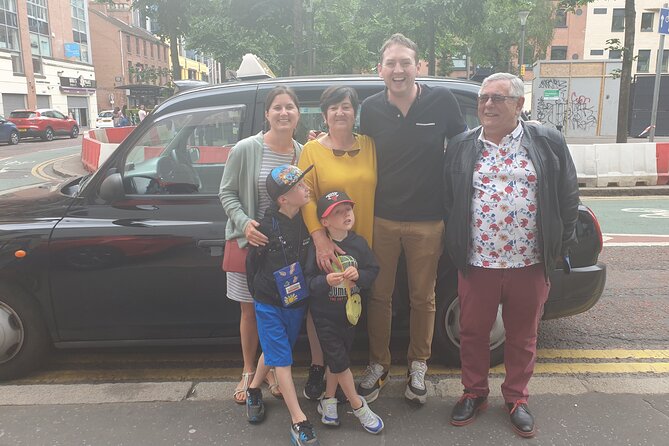
I would recommend it to you if you want to understand Belfast’s modern political story in a short amount of time. It suits couples, families, and small groups who prefer a personal guide over a fixed commentary track.
It is also a good fit if you have read about the Troubles and want to see the places where the events unfolded. One participant with a family connection to Belfast and a strong background in the subject still found the local stories added something beyond books. That is a useful sign for history-minded visitors.
Families can enjoy it too, though you should consider the age and sensitivity of everyone in your group. The subjects include murder, imprisonment, sectarian violence, hunger strikes, and ongoing division. Hugh’s humor helps, but it does not turn the tour into a carefree outing.
I would choose another activity if your main interest is Belfast’s architecture, food, music, or maritime attractions. This route is tightly focused on murals, community identity, and the Troubles. You will see parts of the city that a standard sightseeing tour may skip, but you will not spend much time at attractions such as Titanic Belfast.
The tour is private, and most people can participate. Service animals are allowed, and the route is near public transportation. If you have hearing difficulties, contact the operator before booking so you can discuss what arrangement will work best. Since a good level of English is required, anyone who struggles with spoken English may miss much of the explanation.
Final verdict: book it for context, not just photographs
You should book the Iconic Belfast Black Cab Tour if you want a clear, balanced introduction to Belfast’s divided past and present. The route is well chosen, the private cab keeps the experience personal, and the contrast between Divis Street, the Peace Wall, Bobby Sands’ mural, and Shankill Road gives you a fuller picture than visiting one neighborhood alone.
The best reason to choose it is Hugh Jordan’s style. He explains difficult material without turning the tour into a political argument, answers questions, and adds the human detail that makes the murals easier to understand.
Skip it if you want a purely cheerful city tour or if the subject of political violence feels too intense. For most visitors interested in modern Belfast, though, this 90-minute ride offers strong value and a more honest view of the city than a quick look at the murals from a distance.
FAQ
How long is the Iconic Belfast Black Cab Tour?
The tour lasts approximately 1 hour and 30 minutes.
How much does the tour cost?
The price is $97.05 per group of up to two people.
Is the tour private?
Yes. Only your own group participates in the tour.
Which places does the tour visit?
The route includes Divis Street and Divis Tower, the International Mural Wall on Divis Street, the Peace Wall, Bobby Sands’ mural and the Sinn Féin building, and Shankill Road.
Can I sign the Peace Wall?
Yes. You may sign your name on the Peace Wall if you wish.
Is hotel pickup included?
Inner-city pickup is included from selected hotels and prominent pickup points. Pickup is not available from the port, airport, Titanic Belfast, Crowne Plaza Hotel, Titanic Quarter, Queens Quarter, or cruise ships. Some locations more than half a mile from the city center are also excluded.
Where do I meet if my hotel is not listed?
If you have not selected a hotel, the meeting point is outside the Leonardo Hotel Great Victoria Street.
Is the tour offered in English?
Yes. The tour is offered in English, and a good level of English is required. Confirmation is provided when you book, and free cancellation is available up to 24 hours before the start time.
Just added around Belfast
- Belfast history of terror & mural 1 hr express private taxi tour★ 5.0 · 3 reviews
- Game of Thrones scene location inc Giants causeway from Belfast★ 5.0 · 3 reviews
- Experience the Antrim Coast and the Land of Giants – Private Tour★ 5.0 · 3 reviews
- Giants Causeway Tour From Belfast including Game of thrones sites★ 5.0 · 3 reviews
- Belfast to Dublin Transfer★ 5.0 · 3 reviews
- Private Coast Tour in Belfast★ 5.0 · 3 reviews
- Belfast & Giants Causeway Luxury Mercedes Private Tour for 6 pax★ 5.0 · 3 reviews
- Belfast City Airport (BHD) to Belfast Accommodation – Arrival Private Transfer★ 5.0 · 3 reviews
Belfast Black Taxi & Mural Tours, compared.
Cab Tours Belfast Famous Black Taxi Tours
See the full review →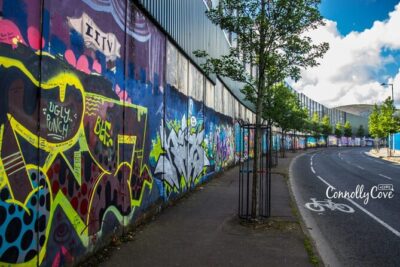
2 Hour Private Belfast Taxi Cab Tour of Troubles & Peace walls
See the full review →Browse the lists this tour appears in