
Reviewed · BELFAST BLACK TAXI & MURAL TOURS
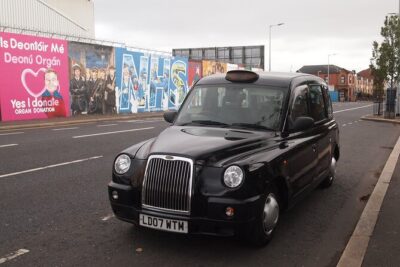
Original Private Belfast Troubles and Peace Cab/Taxi Tour 2 Hours
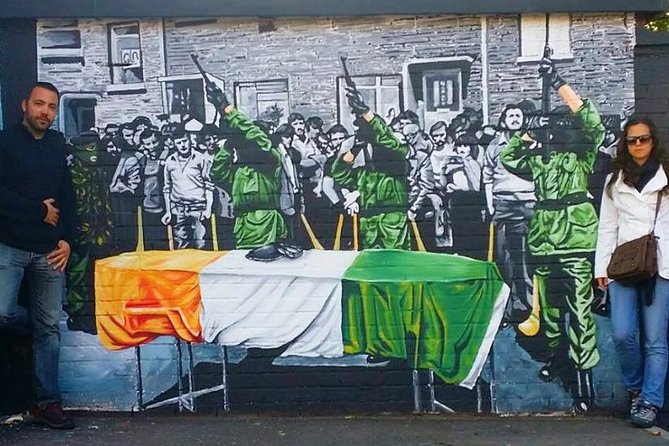
Belfast’s black taxi tours turn a difficult chapter of the city’s past into something you can see at street level. In two hours, you move through Falls and Shankill, stand beside a peace wall, and hear how ordinary people lived through violence that shaped these neighborhoods.
I like the private format, since your group can ask direct questions instead of following a fixed script. I also like the local guides, including Ricky, John, Brennan, and Brendan, whose personal experience gives the political story a human edge.
The main drawback is the short running time. There is a lot to cover, and some stops are quick. This is a strong introduction to Belfast’s Troubles, but not a full study of the conflict or every major site in the city.
Key points at a glance
- Personal local storytelling: Guides who lived through the Troubles explain how the conflict affected Belfast’s streets and families.
- Two communities in one ride: The route visits Republican Falls and loyalist Shankill, giving you a chance to compare their murals, symbols, and stories.
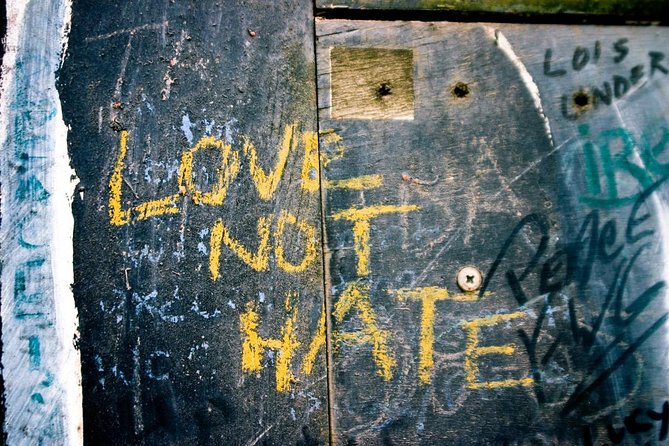
- A chance to write on the peace wall: You can add your name or a peace message beside notes left by public figures.
- Private black taxi: Only your group takes part, with room for questions and a more personal pace.
- Central pickup included: Free pickup is available within 1 kilometer of Belfast City Hall, with a return to the meeting point.
- Strong customer rating: The experience has a 4.9 rating from 90 reviews, with 97 percent recommending it.
Why Belfast’s black taxi tours matter
I find Belfast easiest to understand when you see the physical boundaries for yourself. The murals are not simply colorful decoration. They mark identity, loyalty, grief, political belief, and memory.
A black taxi lets you cover the main areas without worrying about directions or local roads. Your driver-guide does the driving while explaining what you are seeing. That matters here, because the story changes from one street to the next.
The strongest part of this experience is the chance to hear the past from someone connected to Belfast. The guides are not presenting a distant textbook account. The information includes firsthand memories of dangerous streets, community divisions, and the long struggle toward peace.
That personal angle also calls for a little care. A guide’s background can shape the way the story is told. The experience has been praised for presenting both Republican and loyalist viewpoints, but you should still listen closely, ask respectful questions, and remember that Belfast’s political history remains personal.
Other black taxi and mural tours:
- Cab Tours Belfast Famous Black Taxi Tours
★ 5.0 · 3,633 reviews - Private Black Taxi Belfast City Tour
★ 5.0 · 2,188 reviews - Belfast’s Political Mural Taxi Tour
★ 5.0 · 1,180 reviews
Starting at Belfast City Hall
The usual meeting point is outside Belfast City Hall on Donegall Square North. If you are staying in the central area, pickup is free within a 1 kilometer radius of City Hall.
This is useful if you are staying in a central hotel and want door-to-door service. You do not need to make your way across town to a distant depot. If you are outside the free pickup area, the operator can arrange pickup for an added cash charge.
Airport, train station, and cruise port pickups are not included in the advertised price. If you need one of those, ask for the cost before the tour, and plan to pay the surcharge in cash on the day.
The activity ends back at the starting point. That makes it easy to continue sightseeing in central Belfast afterward, perhaps with a museum visit or lunch nearby.
The International Mural Wall on Divis Street
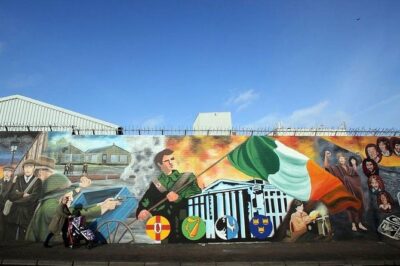
One early stop is the large International Mural Wall on Divis Street. It carries more than 40 murals connected with international causes, including Palestine, Cuba, and the Kurdish people.
The wall helps explain how local Republican politics connected Belfast with struggles elsewhere. It also shows why murals matter here. They are public statements, not private art tucked away in a gallery.
You are given about 10 to 15 minutes at this area. That is enough to look closely, take photographs, and hear the basic story, but not enough to study every image in detail.
The wording and political viewpoints on the murals may be unfamiliar to you. That is exactly why the guide’s explanation matters. I would pay attention to which causes are represented and how the wall connects local identity with international politics.
Falls Road and the Bobby Sands mural
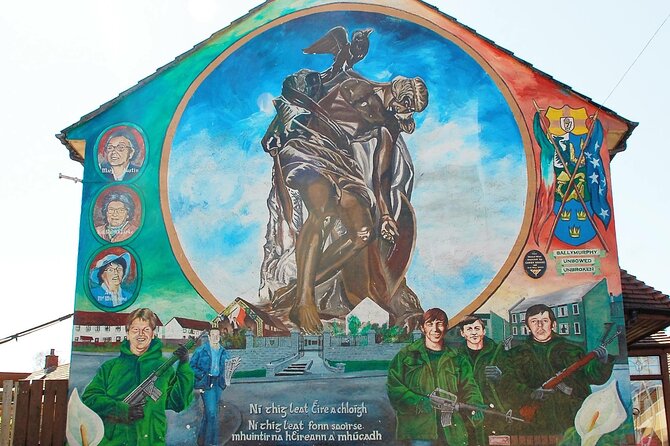
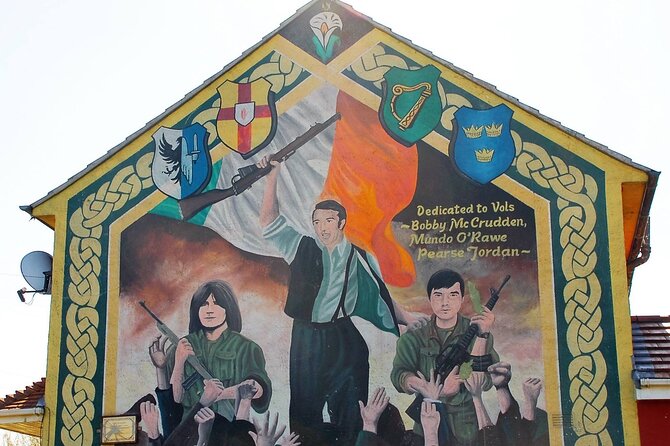
The route continues into the Falls Road area, one of the best-known Republican parts of Belfast. The Bobby Sands mural is a central stop.
Sands was a prominent Republican figure who died during the 1981 hunger strike. His image has become one of the most recognizable political murals in Northern Ireland. The stop gives the guide a natural opening to explain the hunger strike, Republican beliefs, and the way the Falls community remembers its dead.
The tour information also connects the Falls Road with the film In the Name of the Father. That reference may help you place the area if you know the film, but the real value is being there with someone who can explain how the streets functioned during the conflict.
You may get out for photographs and a closer look at the artwork. The tour allows roughly 15 minutes here, so expect a focused stop rather than a long walking tour.
One detail I especially value is the firsthand account of driving through Belfast during its most dangerous years. That kind of story can explain the fear and tension in a way that a list of dates cannot.
A few more Belfast half-days to weigh up
- 2 Hour Private Belfast Taxi Cab Tour of Troubles & Peace walls
★ 5.0 · 240 reviews - 2 hours Belfast Original Drivers The Troubles Black Taxi Tour
★ 5.0 · 227 reviews - World Famous Belfast City Centre Black Cab/Taxi Tour 2 Hours
★ 4.5 · 177 reviews - Original Drivers Belfast Taxi/Cab Tour 2 hour private adventure
★ 5.0 · 74 reviews
Bombay Street and the origins of the conflict
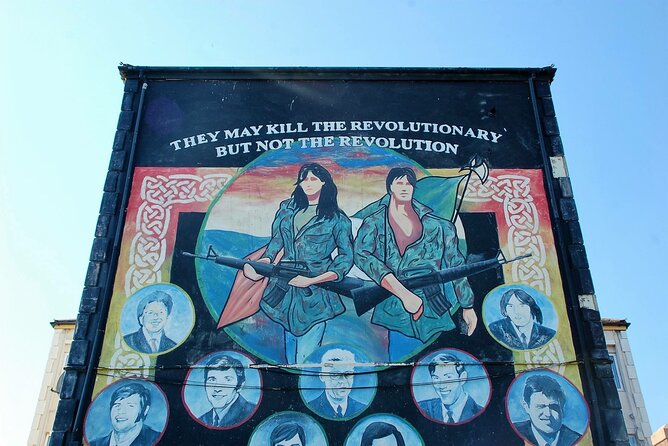
Bombay Street is another important stop. It was burned in 1969 during attacks by loyalist mobs and police, and it is described as the birthplace of the Provisional IRA.
The street brings the Troubles down to a very human scale. Political violence was not only fought by armed groups or discussed in government buildings. Families lost homes, neighborhoods were attacked, and residents were pushed into defensive community structures.
You receive about 15 minutes here. I would use the time to ask how the events of 1969 changed the surrounding area and how the guide distinguishes the early period of the conflict from the years that followed.
Because the tour is only two hours, this stop cannot explain every cause of the Troubles. It does, however, show why Belfast’s political divisions became rooted in particular streets.
Crossing into the loyalist Shankill Road
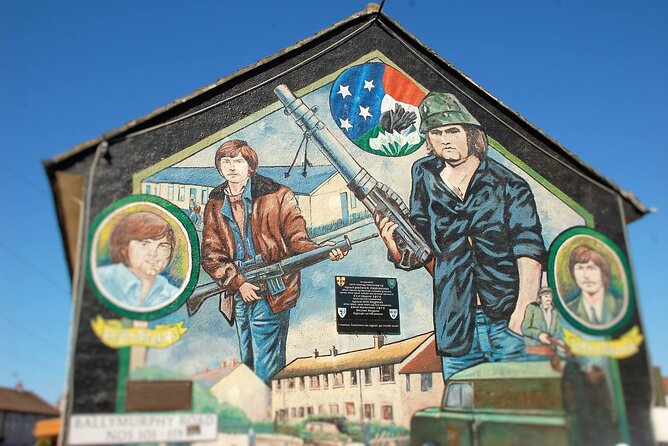
The journey then moves into the Shankill Road area, the main loyalist counterpart to the Falls. Here you learn about the UVF and UDA, their place in loyalist politics, and their conflict with the IRA and British forces.
This change of neighborhood is one of the tour’s most useful features. You are not looking at only one side of Belfast’s story. The murals, symbols, and memorials on the Shankill reflect a different community identity and a different version of the conflict.
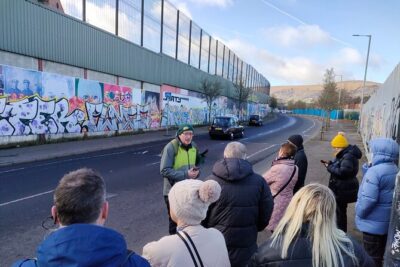
The planned time here is about 30 minutes, making it one of the longer stops. You may have a chance to leave the taxi, take photographs, and look at political murals painted on gable walls.
I would not rush this part. Compare what you see with the Falls murals, but avoid treating the two communities as simple mirror images. Their symbols and memories developed through different experiences, even though both areas suffered violence and loss.
The local guide is particularly valuable on Shankill Road. A guide who grew up with the conflict can explain the meaning behind symbols that might otherwise look like abstract street art.
The peace wall and a personal message
The peace wall is the emotional center of the tour for many people. It is one of Belfast’s largest barriers separating Catholic and Protestant communities.
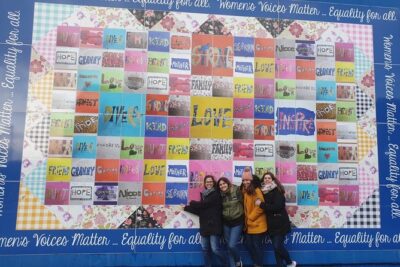
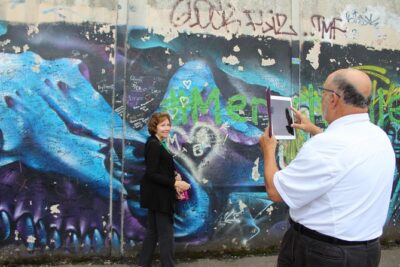
The wall is both practical and unsettling. It was built to reduce violence, yet its very presence shows how divided the city became. You can stand beside it, read messages left by others, and write your own name or a short peace message.
The tour notes that Lady Gaga, Morgan Freeman, and President Clinton have added messages to the wall. Those famous names attract attention, but the quieter messages from ordinary people are often just as interesting.
You have around 15 minutes here. That is enough time for photographs and reflection. I would take a moment to notice the scale of the barrier rather than treating it as a quick photo stop.
The peace wall also helps explain why the tour cannot be reduced to a simple political sightseeing trip. You are seeing a city that has changed, but the physical evidence of separation remains.
Belfast Gaol and Saint Peter’s Cathedral
The route also includes Belfast Gaol, a nineteenth-century prison used as a remand jail. It housed IRA, UVF, and UFF prisoners, and it was used for executions until the 1960s.
The information provided for the tour does not give a fixed visit time or promise entry inside the gaol. Treat it as a drive-by or exterior point unless your guide tells you otherwise.
The gaol adds another layer to the story. The Troubles were not only fought on streets. They also shaped courts, prisons, executions, and the treatment of political prisoners.
Saint Peter’s Cathedral may be included if you request it. Built in the 1800s, it is known for its craftsmanship, and the altar incorporates local women’s wedding rings. A local priest also wrote the Republican song The Foggy Dew.
This is a useful reminder that Belfast’s political story is tied to religion, community life, music, and family tradition. It is not only about armed conflict.
Shankill murals and the upper and lower districts
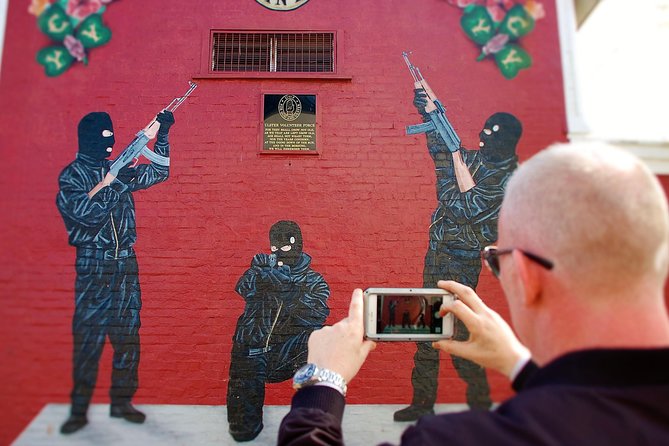
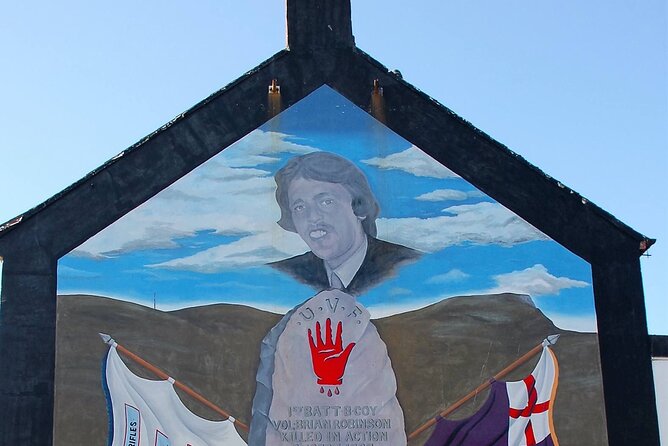
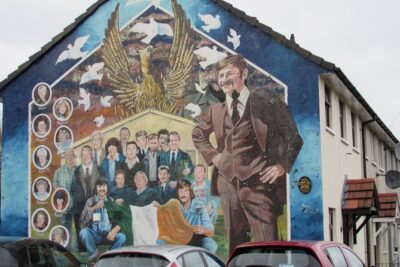
The Shankill area extends through upper and lower sections, and the tour gives you a chance to see more of its political murals. The gable walls serve as large public canvases, often displaying military symbols, memorials, and community messages.
The stop lasts about 15 minutes. You should have time to step out and take photographs, though the exact amount of time can depend on the pace of the private group and the guide’s explanation.
Photography is welcome, but I would keep the mood respectful. These images are connected to people who died and to communities that still carry strong feelings about the past.
The stop also shows how the tour works best when you listen as carefully as you look. The painted images provide the clues, but the guide supplies the context.
Clonard Monastery and a request-only stop
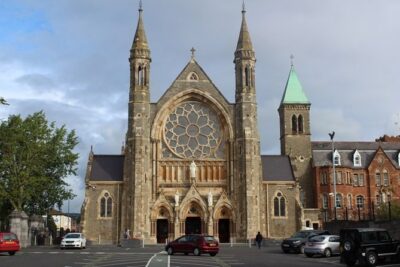
Clonard Monastery is a striking building from the late nineteenth-century period. Its altar is made partly from local women’s wedding rings, and the building was constructed by Italian and local workers more than a century ago.
The guide can bring you to the monastery if you request it. Since this is a two-hour tour with several other stops, it is sensible to mention it when the tour begins rather than waiting until the end.
Clonard adds a quieter religious and architectural note to a route otherwise focused on murals, prison history, and political division. If churches interest you, this may be one of the most appealing additions.
If your priority is strictly the Troubles, you may prefer to spend more time on Falls Road, Shankill Road, or the peace wall. The private format gives you at least some room to express that preference.
What the two-hour schedule really feels like
Two hours sounds generous until you count the pickup, driving, explanations, photographs, and several stops. The published schedule includes many visits of 10 to 15 minutes, along with a longer period on Shankill Road.
I would think of this as a concentrated introduction. You will see a great deal, but you will not have time for long walks, extended museum visits, or detailed examination of every mural.
The taxi format keeps the tour efficient. You can cover separated neighborhoods without losing time on public transport or trying to understand the route yourself. The tradeoff is that much of the experience happens from the vehicle, with short periods outside.
A private group has a clear advantage here. You can ask the driver to clarify a term, explain a mural, or spend an extra moment at a site that matters to you. The tour remains approximately two hours, so flexibility is likely limited, but it should feel more personal than a large coach trip.
The guides and the value of firsthand experience
The guide is the heart of this experience. Guides named in the feedback include Ricky, John, Brennan, and Brendan. Their styles may differ, but the praised qualities are consistent: strong storytelling, local experience, and a willingness to explain the wider context.
One guide was described as giving a balanced account of Ireland’s struggle while also explaining his own past connection to the IRA and his personal goal of peace. That is a powerful but complex kind of guiding.
I would not expect an emotionally neutral account. No one who lived through the Troubles can be completely detached from them. What matters is that the guide gives you room to understand both Republican and loyalist communities.
The best questions are specific and respectful. Ask how a street changed, how residents experienced a particular event, or how the guide sees the peace process today. You are more likely to get a useful answer than by asking for a simple judgment about who was right.
Is $122.09 per person good value?
At $122.09 per person, this is not the cheapest way to see Belfast. The price makes more sense if you are traveling as a small private group and want a local guide, private transport, central pickup, and a focused political tour.
You are paying for the guide’s time and personal knowledge as much as for the taxi ride. A standard sightseeing bus can show you Belfast’s main landmarks, but it is less suited to a sensitive conversation about the Troubles.
The free pickup area is limited to 1 kilometer from City Hall. If you are staying farther away, the added cash surcharge increases the total cost. Airport, train station, and cruise port pickup also costs extra.
I see the best value for people who have only a short stay in Belfast and want a clear introduction to the political neighborhoods. If you are on a strict budget, compare the cost with a larger group tour. If privacy and direct questions matter, the higher price may be justified.
The 4.9 rating from 90 reviews and 97 percent recommendation figure point to a consistently well-received experience, particularly for storytelling and local perspective. Still, the high rating does not change the basic limitation: two hours is brief for such a large subject.
Who should book this black taxi tour?
I would choose this tour if you want to understand why Belfast’s murals and peace walls matter, not just photograph them. It suits first-time visitors, history-minded people, and anyone who prefers a personal guide over a standard city circuit.
It is also a good choice for families with older children, provided the subject matter is appropriate for them. Children must be accompanied by an adult, and most people can participate.
You may want something else if you prefer a museum-based experience, long walks, or a purely architectural tour. The route deals directly with violence, prison, political groups, and death. It is not light sightseeing.
I would also set aside time afterward to think about what you have seen. The tour moves quickly from one community to another, and the full meaning of the murals may take time to settle.
Practical details before you reserve
Confirmation is provided when you book, and mobile tickets are accepted. The tour is offered in English and is private, so only your group participates.
The standard meeting point is Belfast City Hall, and the activity returns there. Free city-center pickup is available within 1 kilometer of the building. Ask in advance about any pickup outside that area, since extra charges are paid in cash on the day.
Free cancellation is available if you cancel at least 24 hours before the scheduled start time. Cancellations or changes made less than 24 hours before the start are not refunded or accepted.
Should you book it?
Book this tour if you want Belfast explained by someone close to its lived experience. The combination of private transport, Falls and Shankill visits, political murals, Bombay Street, and the peace wall gives you a useful first look at the city’s divided past.
The strongest reason to choose it is the guide. Ricky, John, Brennan, or Brendan may be assigned to your group, and each brings a personal connection to Belfast’s story. The main caution is pace: two hours goes quickly, and some stops are brief.
For a first visit, I think the tour is worth considering, especially if you value direct conversation and local context. If you want more time at each site, pair it with a longer museum visit or a separate walking experience.
FAQ
Where does the tour start?
The standard meeting point is Belfast City Hall, Donegall Square North, Belfast BT1 5GS.
Is hotel pickup available?
Free pickup is offered from central locations within 1 kilometer of Belfast City Hall. Pickup outside that zone can be arranged for an added cash charge.
Are airport, train station, and cruise port pickups included?
No. Pickup from airports, train stations, and cruise ship ports is not included and requires a surcharge paid in cash on the day.
How long does the tour last?
The tour lasts approximately two hours.
Is this a private experience?
Yes. Only your group participates in the private taxi tour.
What language is the tour offered in?
The tour is offered in English.
Can children join?
Yes, but children must be accompanied by an adult.
Can I cancel for a full refund?
Yes, if you cancel at least 24 hours before the experience start time. Cancellations or changes made less than 24 hours before the start are not accepted, and the amount paid is not refunded.
Just added around Belfast
- Game of Thrones scene location inc Giants causeway from Belfast★ 5.0 · 3 reviews
- Belfast history of terror & mural 1 hr express private taxi tour★ 5.0 · 3 reviews
- Giants Causeway Tour From Belfast including Game of thrones sites★ 5.0 · 3 reviews
- Experience the Antrim Coast and the Land of Giants – Private Tour★ 5.0 · 3 reviews
- Private Coast Tour in Belfast★ 5.0 · 3 reviews
- Belfast & Giants Causeway Luxury Mercedes Private Tour for 6 pax★ 5.0 · 3 reviews
- Belfast to Dublin Transfer★ 5.0 · 3 reviews
- Belfast City Airport (BHD) to Belfast Accommodation – Arrival Private Transfer★ 5.0 · 3 reviews
Belfast Black Taxi & Mural Tours, compared.
Cab Tours Belfast Famous Black Taxi Tours
See the full review →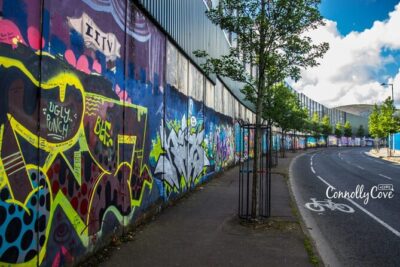
Browse the lists this tour appears in