
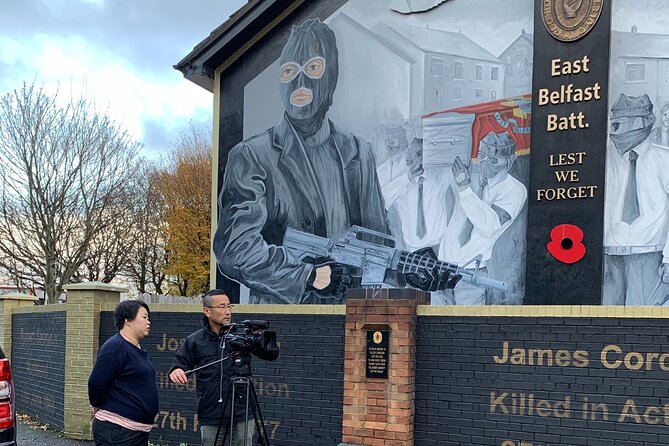
Reviewed · BELFAST BLACK TAXI & MURAL TOURS
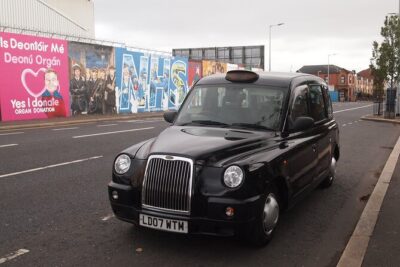
The Troubles and iconic award winning taxi 2hr private cab tour
Belfast’s past is painted across its streets. On this private taxi tour, you move from the Republican Falls Road to the Loyalist Shankill Road, stopping at murals, memorials, a former prison, and the peace walls that still divide parts of the city. The most useful part is hearing the story from a local driver-guide who lived through The Troubles, rather than getting only a polished museum version.
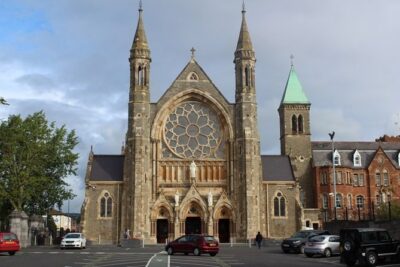
I like the one-to-one feel of a private cab, where you can ask direct questions and spend more time at the places that interest you. I also like the chance to see both communities in one outing, including the Bobby Sands mural, Clonard Monastery, the International Mural Wall, and the Shankill murals.
The main caution is that the tour is strongly shaped by the guide’s own political background. Most guides work hard to explain both Republican and Loyalist views, but the experience can vary. One poor review also described a cigarette smell in the taxi and unclear delivery, so it is wise to confirm the pickup and tour length before setting off.
Key points to know before booking
- Personal accounts shape the tour: Guides including David, Ricky, Sean, and Gerard have been praised for explaining The Troubles through lived experience.
- You see both sides of Belfast: The route links Republican Falls Road with Loyalist Shankill Road.
- Murals are the main visual record: Bobby Sands, international causes, family homes, and British loyalty all appear along the route.
- The peace wall is still a real dividing line: You can write your name on part of the wall and see how recent the division remains.
- Pickup is limited but useful: Free collection is available within 1 kilometer of Belfast City Hall, with extra charges for some transport hubs.
- The tour has a strong rating, with a clear caveat: It is rated 4.9 out of 5 from 28 ratings, and 96 percent of bookers recommend it, but guide quality and vehicle condition matter.
Belfast’s political story, told from the front seat
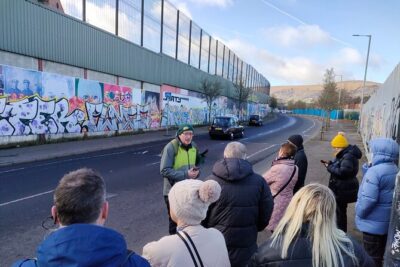
A taxi is a fitting way to see Belfast’s divided neighborhoods. You are not simply driven past a list of sights. The driver points out streets, walls, murals, churches, former military positions, and community buildings, then explains how each place fits into the conflict.
The Troubles were a period of political and sectarian conflict in Northern Ireland, especially intense from the late 1960s through the 1990s. The basic divide was between mostly Catholic Republicans and mostly Protestant Loyalists, though the story is more complicated than that short description suggests. Republicans generally wanted Northern Ireland to leave the United Kingdom and join a united Ireland. Loyalists wanted Northern Ireland to remain part of the United Kingdom.
This tour is useful because you see how those beliefs were expressed at street level. Murals were painted on gable walls and homes. Prisons held political prisoners. Monasteries became places for quiet talks. Walls were built to separate communities, then left standing long after the worst violence eased.
Because this is a private tour, you can ask about names, symbols, flags, and events that might otherwise pass too quickly. Guides have included David, Ricky, Sean, and Gerard. Their approach is not identical, but the strongest accounts combine personal experience with an effort to explain both communities.
Other black taxi and mural tours:
- Cab Tours Belfast Famous Black Taxi Tours
★ 5.0 · 3,633 reviews - Private Black Taxi Belfast City Tour
★ 5.0 · 2,188 reviews - Belfast’s Political Mural Taxi Tour
★ 5.0 · 1,180 reviews
Bobby Sands mural and the Falls Road
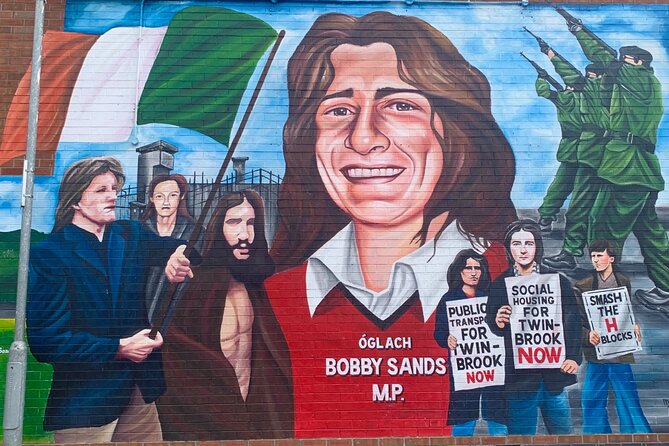
The Bobby Sands mural on the Falls Road is the emotional center of the tour. Sands was an IRA volunteer and one of the hunger strikers who died in 1981 while imprisoned. He was also elected as a Member of Parliament during his hunger strike, giving the episode international attention.
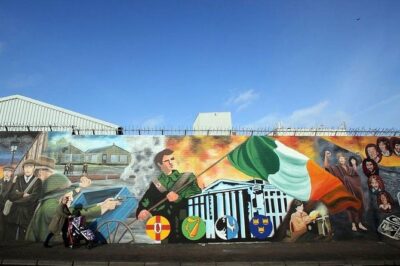
Your guide explains the mural and the Republican view of the conflict, along with the Falls Road’s role in West Belfast. You get time to take photographs, but this is more than a quick picture stop. The mural is tied to memory, sacrifice, and the political identity of the local community.
The Falls Road is described as the heart of Republicanism and as the birthplace of the Provisional IRA. That language gives you a clue about the tone. The guide will not present a detached list of dates. You will hear how the area understands its own past, including the hunger strike and the long connection to Irish nationalism.
If you want a neutral overview with little political feeling, this may feel intense. If you want to understand why these images still matter to people in Belfast, it is one of the most valuable stops.
Divis Flats and the burning of 1969
Divis marks the start of the Falls Road route. The welcome mural here carries the message that everyone is welcome, but the surrounding story is much darker.
The guide explains how a British Army base occupied the top three floors of Divis Flats. The tour also covers the burning of the Falls Road in 1969 by Loyalists and places these events within a much longer account of Irish and British rule.
You will hear the Republican interpretation of the army presence and the claim that residents were used as human shields. This is a good place to listen closely and ask questions, since the same events can be remembered very differently across Belfast.
The planned stop is short, around 10 minutes. That is enough for an explanation and a look, but not enough for a long independent visit.
Clonard Monastery and secret peace talks
Clonard Monastery is important to West Belfast’s Catholic community. Its church and community role connect it to the spiritual side of the neighborhood, but its political importance comes from the private peace talks held there between Gerry Adams and John Hume.
Those meetings helped create channels for dialogue at a time when open political contact was difficult. The monastery therefore represents a quieter part of the story: not the walls or weapons, but the long, uncertain work of talking.
You have about 10 minutes here. The stop is brief, yet it gives the route a useful change of pace after the heavier material on the Falls Road. Ask your guide how the monastery’s religious role and political role overlap, since that connection is central to why this place matters.
A few more Belfast half-days to weigh up
- From Belfast: Giant’s Causeway Full-Day Guided Trip
★ 4.8 · 6,361 reviews - Titanic Belfast Entrance Ticket: Titanic Visitor Experience Including SS Nomadic
★ 4.5 · 3,698 reviews - A History of Terror – Belfast City Centre Walking Tour
★ 5.0 · 2,883 reviews - Game of Thrones and Giant’s Causeway Full-Day Tour from Belfast
★ 5.0 · 2,291 reviews
Crossing into the Shankill Road
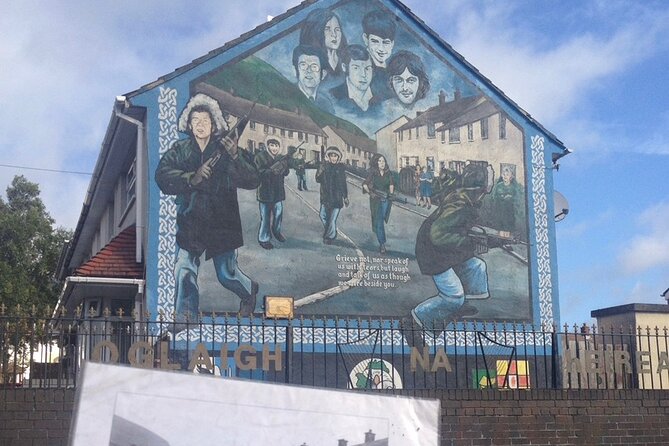
The move from the Falls to the Shankill is one of the tour’s most important moments. You are not crossing from one attraction to another. You are moving between two communities with different identities, memories, flags, heroes, and ideas about Northern Ireland’s future.
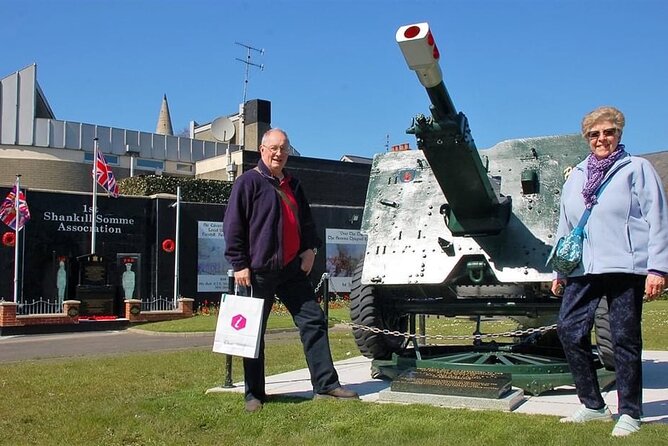
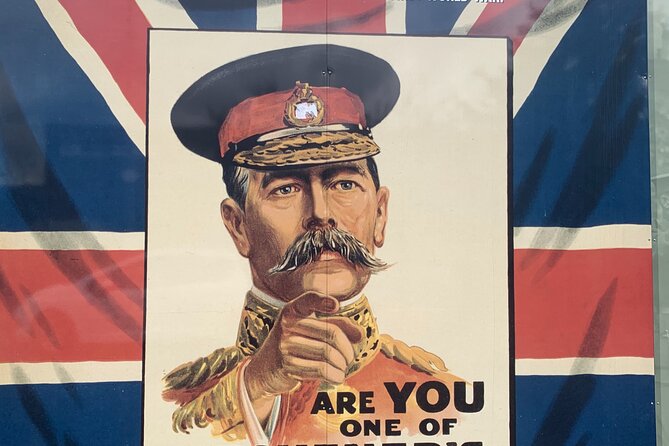
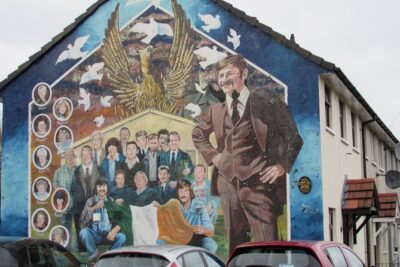
The Shankill Road is presented as the center of the Loyalist community and as the birthplace of the UVF and UDA. Your guide explains the murals painted by local people, often on or beside family homes, and the continuing loyalty many residents feel toward the British Crown.
The tour also places Loyalist identity within 800 years of British history in Ireland. That is a large subject for a short drive, so the quality of the explanation matters. A good guide will separate historical background from political opinion and show why union with Britain remains important to many people.
You have around 40 minutes here, making it the longest scheduled stop. That gives you time for photographs and a fuller explanation of the murals. Be respectful. These are not just colorful public artworks. Many carry the names of organizations, memorials to people who died, or symbols that remain politically charged.
The tour is strongest when the guide gives you both the Loyalist and Republican meaning of similar symbols. Several guides have been praised for doing this, while one account described the information as unclear. That difference is worth keeping in mind when you book a private experience built around the personality of one driver.
Crumlin Road Gaol and the prison tunnel
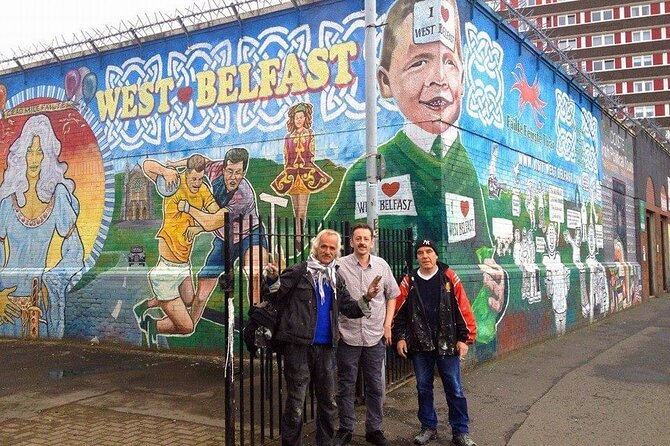
Crumlin Road Gaol was built in the 1800s and held many political prisoners. It was also a prison where executions took place into the 1960s. A tunnel under Crumlin Road connected the jail with the courthouse, adding a vivid physical detail to the story.
The cab tour does not include a full prison admission. Instead, you see the site and hear how it fit into Belfast’s political conflict. That keeps the tour moving, but it also means you should not expect the complete guided prison experience offered by a separate visit.
This 10-minute stop works best as part of the larger route. The gaol helps explain the machinery of the state, while the murals and peace walls show how the conflict affected neighborhoods outside prison gates.
The International Mural Wall on Divis Street
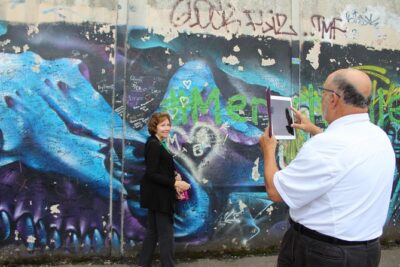
The International Mural Wall is one of the more unusual stops. It contains more than 40 murals, with subjects changing over time. The works support causes and communities around the world, including Palestine, Kurdish groups, and Cuba.
This is where Belfast’s local politics connects with international struggles. The wall shows how the Republican community has expressed solidarity with people it sees as oppressed or denied a political voice.
The murals can change monthly, so the exact display is not fixed. That gives the stop a living quality, but it also means the wall you see may not match older photographs or descriptions.
You have around 10 minutes here. Your guide’s explanation adds the most value, since political imagery is easy to misread if you do not know the symbols or the cause being represented.
The peace wall and a divided city
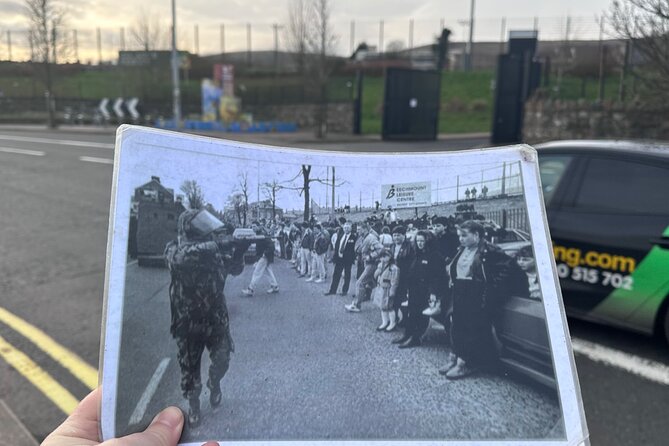
The peace walls were built from 1969 onward to reduce violence between communities. More than 30 walls remain around Belfast. Their name sounds reassuring, but their presence is also a reminder that separation became the chosen way to keep the peace.
At the wall, you can write your name. That small act may feel touristy, but it also gives you a moment to consider the strange reality of a city where a peace measure can look like a border.
The stop lasts about 10 minutes. You will not see every wall in Belfast, and this is not a tour of current politics in full. You will see enough to understand that the conflict is not simply an old story preserved in murals. Physical barriers remain part of the city.
Falls Road Library and the 1981 hunger strike
The Falls Road Library sits opposite the former Black and Tans base and beside the Bobby Sands mural associated with Sinn Féin headquarters. The stop returns you to the Republican account and focuses on the 1981 hunger strike.
This section can be emotionally demanding. Sands and the other hunger strikers are viewed by Republicans as political prisoners and martyrs, while many Unionists reject that interpretation and focus on the IRA’s armed campaign. A responsible guide needs to explain why the event carries such different meanings.
The scheduled time is about 15 minutes. That should give you a focused account, but you may want to ask your guide for book or film recommendations if you want to study the hunger strike after the tour.
Shankill graveyard and the final murals
The final stop returns to the Shankill side. The upper and lower Shankill areas contain murals expressing Protestant identity and loyalty to the British Crown. You have time to photograph them and compare their colors, symbols, and memorial themes with the murals seen earlier on the Falls Road.
Ending here gives the route a useful balance. You are not left with only one community’s account. The tour has moved back and forth across the divide, showing how both sides use walls and public images to preserve memory.
The visit is brief, around 15 minutes. Since murals can be painted on private homes, the guide’s explanation is important. Take photographs carefully and avoid treating memorials as simple backdrops.
Is $120.64 per person good value?
At $120.64 per person, this is not the cheapest way to see Belfast. The value depends on your group size and your interest in the subject.
For a private group, the price includes a driver-guide, a roughly two-hour route, and pickup within 1 kilometer of Belfast City Hall. You are paying for local interpretation and door-to-door movement between neighborhoods that are spread across West Belfast, not for admission to a major attraction.
The tour does not include airport, train station, or cruise port pickup without an added charge. Cruise ship pickup is not offered because the port is several miles from central Belfast. If you arrive by cruise shuttle, you can be dropped near Visit Belfast, across from City Hall, and arrange collection at the City Hall front gates.
I see the price as reasonable for a small private group that wants context rather than a quick drive past murals. It is less compelling if you mainly want photographs or if you plan to visit Crumlin Road Gaol separately and prefer a broad city tour.
The advertised duration is about two hours. One booking problem described a mismatch between a shorter tour and a longer political tour, followed by a much longer private replacement from the owner. That was an unusual outcome, not something to plan on. Confirm that your booking says the two-hour tour and make sure the driver knows the same details.
What the guide can add, and what to watch for
The best part of this experience is the guide’s voice. David’s personal stories have been praised for bringing the subject to life. Ricky has been singled out for friendly explanations and first-hand insight. Sean has been credited with presenting an equitable account, and Gerard has been described as personal while still aiming for balance.
You should expect the guide to have a political viewpoint. That is not automatically a flaw. Personal experience can make the story clearer and more human, but it can also affect which facts receive the most attention.
I suggest asking open questions. Ask how Republicans and Loyalists view the same event. Ask what changed after the Good Friday Agreement, even though the supplied route focuses mainly on the conflict and its visible remains. Ask which parts of a story are established fact and which parts are community memory.
The vehicle itself also matters. One poor account described an overwhelming cigarette smell and a driver who seemed unwell or distracted. Most of the praise centers on guide quality, but this complaint is specific enough to take seriously. If the cab arrives in poor condition, raise the issue promptly rather than letting it spoil the entire outing.
Who should book this Belfast taxi tour?
I would choose this tour if you want a focused introduction to The Troubles and prefer a local voice to a large coach group. It suits adults, couples, families with older children, and anyone interested in political murals, modern Irish history, or the uneasy peace in Northern Ireland.
It is also a good choice if you have only a short stay in Belfast. In two hours, you reach several major political sites without having to work out the route yourself.
I would think twice if you want a strictly neutral academic presentation. The tour is built around local guides and personal accounts, so the tone may vary. It may also be a poor fit if you dislike politically charged subjects, memorials connected with armed groups, or discussions of death and imprisonment.
Children must be accompanied by an adult. Most people can take part, service animals are allowed, and the tour is near public transportation. Confirmation is provided at booking, and free cancellation is available up to 24 hours before the start time. If the operator cancels because its minimum number is not met, you are offered another date or experience, or a full refund.
Should you book it?
Book it if you want Belfast explained through its neighborhoods, murals, walls, and personal memories. The route covers more ground than a simple mural photo stop, and the private format gives you room to ask questions.
Before paying, confirm the two-hour duration, your pickup point, and any extra charge connected with your arrival location. I would also request a clean, nonsmoking taxi if that matters to you. With those points settled, this is a strong way to begin understanding Belfast’s divided past, especially if you listen for both the facts and the viewpoint behind them.
FAQ
How long is the Troubles taxi tour?
The tour lasts approximately two hours.
Where can I be picked up for free?
Free pickup is available within a 1 kilometer radius of Belfast City Hall. You can also arrange pickup at the front gates of City Hall.
Can I be picked up at a cruise ship port?
No. Cruise ship pickup is not offered because the port is several miles outside Belfast city center. The cruise shuttle bus can leave you near Visit Belfast, across from City Hall.
Is the tour private?
Yes. Only your group participates in the private activity.
What language is the tour offered in?
The tour is offered in English.
Can I cancel for a full refund?
Yes, if you cancel at least 24 hours before the experience start time. Cancellations or changes made less than 24 hours before the start time are not refunded.
Just added around Belfast
- Belfast history of terror & mural 1 hr express private taxi tour★ 5.0 · 3 reviews
- Game of Thrones scene location inc Giants causeway from Belfast★ 5.0 · 3 reviews
- Giants Causeway Tour From Belfast including Game of thrones sites★ 5.0 · 3 reviews
- Experience the Antrim Coast and the Land of Giants – Private Tour★ 5.0 · 3 reviews
- Belfast to Dublin Transfer★ 5.0 · 3 reviews
- Private Coast Tour in Belfast★ 5.0 · 3 reviews
- Belfast & Giants Causeway Luxury Mercedes Private Tour for 6 pax★ 5.0 · 3 reviews
- Belfast City Airport (BHD) to Belfast Accommodation – Arrival Private Transfer★ 5.0 · 3 reviews
Belfast Black Taxi & Mural Tours, compared.
Cab Tours Belfast Famous Black Taxi Tours
See the full review →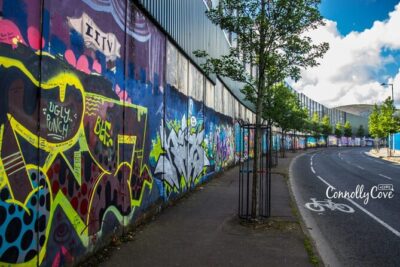
Browse the lists this tour appears in