
Reviewed · WALKING TOURS
Adult Foraging Walk & Bushcraft Cookery Course for Beginners
The best part of this Northern Ireland experience is that you do not simply walk past wild plants while someone names them. You learn what you can safely identify, gather, prepare, and eat, then put those lessons to work beside a campfire. Guide David also adds hands-on bushcraft, including fire-making, spoon whittling, mallet-making, and survival whistles.
I like the small group size of up to eight, which gives the session a personal feel, and I like the way the course mixes useful skills with good food. Nettle soup, pizza, and chocolate banana cooked over the fire turn a lesson into a proper meal. The main consideration is the three-and-a-half-hour time limit. It packs in a lot, so this is an introduction rather than a full course in every plant or bushcraft skill.
Key points at a glance
- Taste wild plants safely: Learn basic plant identification, seasonal availability, and culinary uses before trying selected items fresh from the ground.
- Cook what you gather: Prepare food at the forest school site, including nettle soup and campfire dishes such as pizza and chocolate banana.
- Meet David, your guide: Expect clear instruction, practical help, and plenty of facts about plants and trees.
- Try real bushcraft: Make wooden spoons, mallets, and survival whistles, and learn how to build and use a fire.
- Enjoy a varied setting: The route includes woodland, flower-lined paths, alpaca fields, and ponds around BallyBurren.
- Keep the group intimate: A maximum of eight people makes it easier to ask questions and take part.
Why this beginner course works
Foraging can look simple until you try to identify a plant with confidence. A leaf may resemble another species, a plant may be safe at one time of year but less useful at another, and a tasty idea is no substitute for proper guidance. This course starts with the basics, which is exactly right for a first outing.
David leads the plant identification section before you head out to gather. You learn to look at a plant’s characteristics, when it is available, and how it might be used in food. That approach matters. You are not just collecting a list of edible names. You are learning a way to observe plants and make better decisions outdoors.
I also appreciate the ethical side of the teaching. Responsible foraging means taking care with the plants, the ground, and the amount you remove. The course presents wild food as part of a sustainable food experience, not as a free-for-all. For a beginner, that message is as important as the cooking.
The session is offered in English and runs for about three hours and 30 minutes. That is long enough to cover several different activities without turning the day into an exhausting expedition. It is also short enough to fit neatly into a visit to the wider BallyBurren area.
More walking tours in Northern Ireland:
- A History of Terror – Belfast City Centre Walking Tour
★ 5.0 · 2,883 reviews - Belfast Political Tour-Conflicting Stories Walking Tour
★ 4.5 · 459 reviews - Best of Belfast Walking Tour
★ 5.0 · 399 reviews
Meeting at BallyBurren Outdoor Escapes
Your starting point is the car park at BallyBurren Outdoor Escapes, 143 Dromore Road, Ballynahinch, BT24 8HZ, UK. The activity finishes back at this same meeting point, so you do not need to plan a separate pickup at the end.
From the car park, the group walks to the forest school site. This short transition sets the tone: the course moves from a practical meeting place into a more natural setting where the food and bushcraft work will happen.
The setting is one of the experience’s strongest features. You might walk among wooded areas, flower-lined paths, alpaca fields, and ponds. The variety keeps the outing from feeling like a single straight woodland walk, and it gives David different plants and trees to discuss along the way.
This is still a practical class, not a long-distance hike. The supplied details do not give a walking distance or difficulty rating, so you should think of it as a guided foraging walk connected to a forest school session rather than a demanding trek.
Starting with plant identification
The first teaching section introduces the basic principles of identifying wild plants. David explains features to notice, when common plants appear, and how they can be used in the kitchen.
That foundation makes the later walk more useful. Instead of hearing names in passing, you can connect each plant to a shape, texture, season, or cooking idea. The course also covers the advantages of wild edibles and the need to forage with care.
A major benefit for beginners is the chance to ask questions as you go. In a large group, it can be hard to see what the guide is pointing toward or to admit you are unsure. With no more than eight people, you have a better chance to stay close and follow the explanation.
You should not leave assuming that every plant you see in the future is safe to eat. The value here is learning the habit of careful identification, not receiving a license to pick anything green. Pay close attention to the warnings and methods David gives you.
The foraging walk and fresh tasting
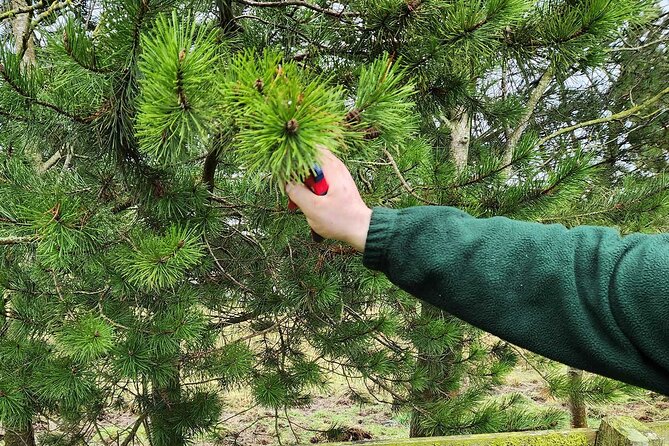
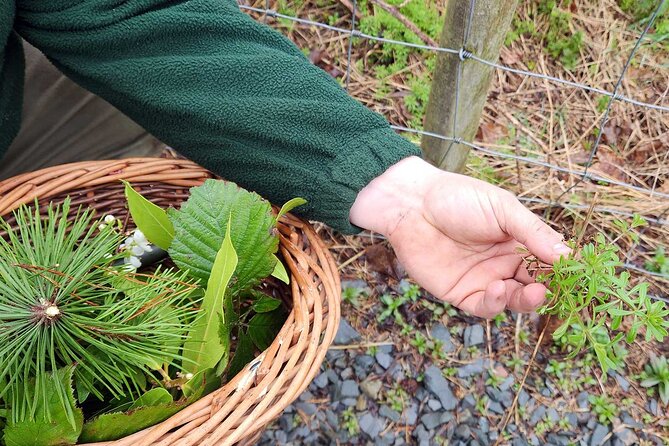
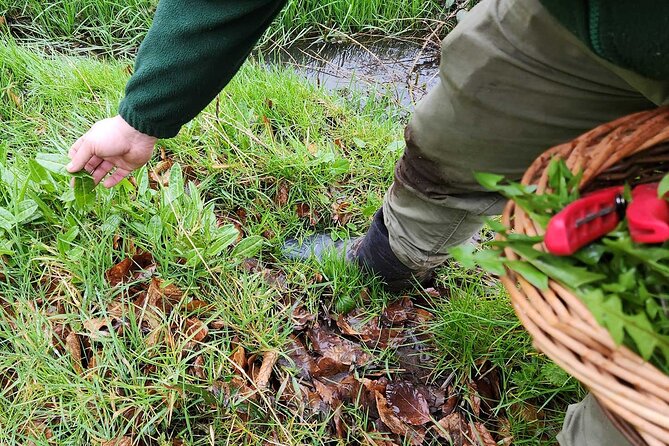
After the introduction, you head out on a foraging walk. David points out plants and trees, explaining their characteristics, seasonal availability, and possible uses.
The tasting element brings the lesson to life. Selected items are tried fresh from the ground, alongside produce that is available out of season. This gives you a useful comparison between wild ingredients and the food you normally buy or grow.
For some people, the biggest surprise will be flavour and texture. A plant that looks familiar may taste completely different from what you expect. That is part of the appeal, but it is also why the guide’s instruction matters. You are tasting within a structured lesson rather than experimenting on your own.
The walk also gives the course a stronger sense of place. You are not sitting in a classroom memorising plant names. You are seeing the plants where they grow, then carrying the idea of them into the cooking session.
Same city, a completely different day out:
- From Belfast: Giant’s Causeway Full-Day Guided Trip
★ 4.8 · 6,361 reviews - Titanic Belfast Entrance Ticket: Titanic Visitor Experience Including SS Nomadic
★ 4.5 · 3,698 reviews - Cab Tours Belfast Famous Black Taxi Tours
★ 5.0 · 3,633 reviews - Game of Thrones and Giant’s Causeway Full-Day Tour from Belfast
★ 5.0 · 2,291 reviews
Bushcraft that keeps your hands busy
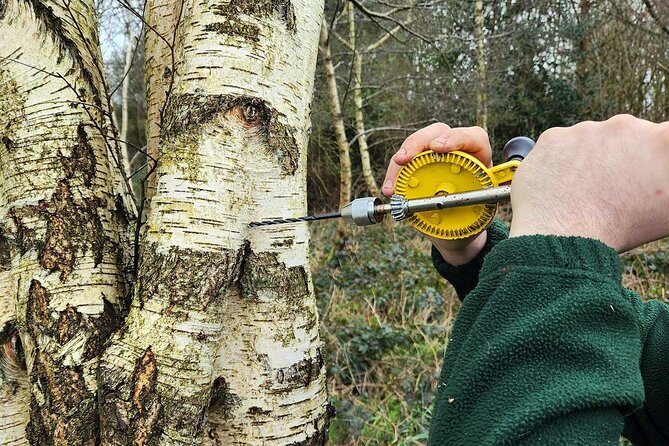
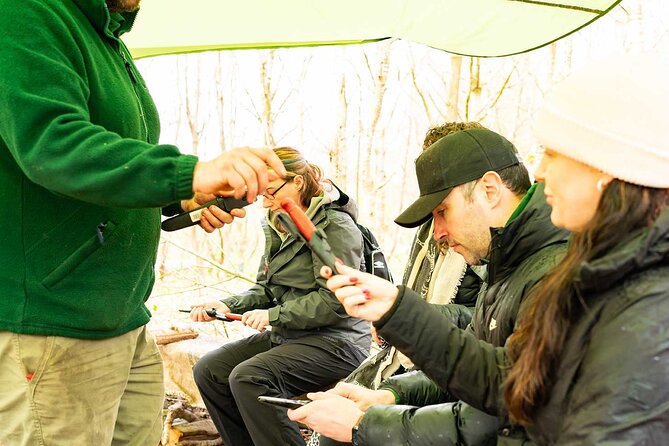
The course adds several simple bushcraft projects. Depending on the flow of the session, you can learn to make a wooden spoon, a mallet, or a survival whistle.
These are not just decorative extras. Whittling a spoon asks you to work slowly and pay attention to the wood. Making a whistle shows how a basic natural material can become something useful. A mallet gives you another practical object to shape and handle.
You may also gather flowers and create a picture from them. This offers a gentler activity alongside fire-making and woodwork, and it suits people who want a creative connection with the setting rather than a purely survival-focused lesson.
The mix is especially good for families and mixed-age groups. One person may enjoy plant facts, another may prefer carving, and someone else may be waiting for the cooking. A parent and daughter particularly enjoyed having so many different tasks to share, which suggests that the experience can work well as a joint activity rather than a simple guided walk.
Learning to make and use the campfire
Fire-making is another central part of the bushcraft session. David teaches you how to make fires before the group uses them to cook.
This is where the course feels most hands-on. You are not simply watching a demonstration and then being served a meal. The food is part of the process, and the fire gives the group a shared task.
The outdoor cooking menu can include nettle soup, pizzas, and chocolate banana. The nettle soup connects directly to the foraging lesson. Pizza provides a familiar, filling dish that is easy to enjoy after time outdoors. Chocolate banana gives the session a sweet finish.
The exact food selection may vary, but the supplied details specifically include these dishes, along with tasting wild items and out-of-season produce. You should expect the cooking to be rustic and participatory rather than restaurant-style. That is the point. The reward is understanding how the ingredients come together over a fire.
For many people, this will be the most memorable section. You learn a useful outdoor skill, then eat something made with that skill. It also gives the group time to relax and talk after the more focused plant walk.
A guide who makes the course approachable
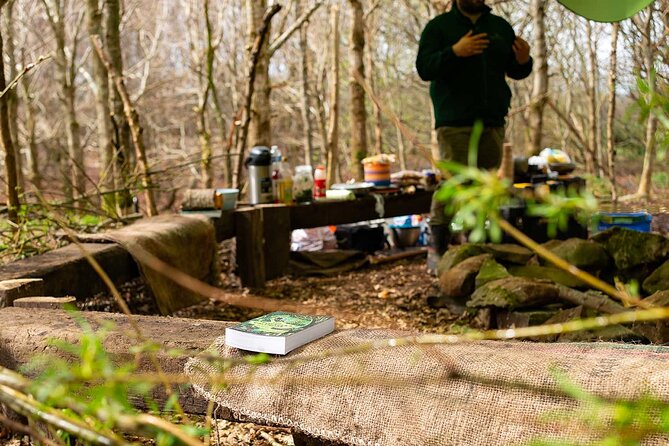
David is the named guide for the experience, and his role is more than simply leading the route. He explains plants and trees, helps with carving and fire-making, and supports people through the cooking activities.
The strongest feature of his teaching style is the range of the session. You move from identification to tasting, from woodwork to fire, and from gathering to eating. David’s patience is particularly useful for beginners, who may need a second explanation before a plant or technique makes sense.
The course also appears suitable for different confidence levels. A parent and daughter enjoyed it as a shared day out, while another family found that David took special care with a son who has autism. That does not promise a particular support plan for every participant, so you should contact the provider if you have specific needs. Still, it shows the value of an attentive guide in a small group.
Service animals are allowed. The experience is conducted in English.
What the $88.24 price gets you
At $88.24 per person, this is not the cheapest way to spend three and a half hours outdoors. The value depends on how much you want from the session.
If you only want a short nature walk, the price may feel high. You are paying for far more than walking, though. The session combines guided plant identification, ethical foraging instruction, fresh tasting, bushcraft projects, fire-making, and food prepared over the campfire.
The small maximum of eight also matters. A private lesson would normally cost more, while a big group can make practical work frustrating. Here, you have a better chance to hold the tools, ask David about a plant, and take part in cooking rather than standing at the edge.
The food adds value, but do not book this as a standard lunch. It is an outdoor meal created as part of the lesson. The satisfaction comes from eating nettle soup or campfire pizza after learning where some ingredients come from and how the fire was made.
I see the price as reasonable for a visitor who wants a memorable, active introduction to foraging and bushcraft. It is less compelling if you are not interested in handling wood, learning fire skills, or tasting unfamiliar plants.
Who should book this experience
I would recommend it most strongly to beginners who want a safe introduction to wild food. You do not need to arrive with foraging experience, and the course covers the basic ideas before asking you to identify and gather.
It also suits:
- Families looking for an activity everyone can share
- Parents and adult children who want time away from ordinary sightseeing
- Nature lovers who enjoy learning by doing
- Food-focused visitors who like unusual ingredients
- Anyone curious about basic bushcraft without signing up for a longer survival course
- Small groups that prefer personal instruction
The varied activities make it a good choice for people with different interests. If one member of your group loves plants and another prefers making things, both have a reason to take part.
I would think twice if you want a quiet, uninterrupted walk or a specialist botany course. The experience is action-packed, with several activities fitted into a limited time. It also involves tasting wild foods, so people unwilling to try unfamiliar flavours may miss one of the course’s main pleasures.
Timing, group size, and practical details
Plan on about three hours and 30 minutes from start to finish. You meet at the BallyBurren Outdoor Escapes car park, walk to the forest school site, take part in the foraging and bushcraft work, cook and taste food, then return to the car park.
The mobile ticket makes access straightforward, and confirmation is provided at booking. The activity is limited to eight people, which is a useful detail for anyone deciding between a personal class and a busier group outing.
Free cancellation is available if you cancel at least 24 hours before the start time. Cancellations made less than 24 hours ahead are not refunded, and changes inside that period are not accepted. The cut-off follows local time.
Because this is an outdoor session involving woodland, plants, carving, and an open fire, the experience is best approached as practical country activity rather than polished sightseeing. The supplied information does not specify clothing, footwear, or weather arrangements, so ask BallyBurren Outdoor Escapes before booking if you need those details.
Should you book the BallyBurren course?
Book it if you want to leave with more than photographs. You will learn how to look at wild plants, think about ethical gathering, try unfamiliar flavours, and make simple items from wood. The campfire meal gives the afternoon a satisfying purpose, and David’s patient instruction helps beginners take part.
The best reason to book is the combination of skills. A standard foraging walk might end after plant identification. This one carries the lesson into tasting, carving, fire-making, and cooking.
Skip it if you want a long walk, a specialist plant survey, or a conventional meal with no hands-on work. For everyone else, the $88.24 price is fair for a small, active session that connects food, nature, and practical skills in one visit to Ballynahinch.
FAQ
Where does the foraging and bushcraft course start?
It starts at the car park of BallyBurren Outdoor Escapes, 143 Dromore Road, Ballynahinch, BT24 8HZ, UK.
Where does the activity finish?
The experience ends back at the same meeting point.
How long does the course last?
The course lasts approximately three hours and 30 minutes.
How many people can join the activity?
The group has a maximum of eight travelers.
Is the course offered in English?
Yes. The activity is offered in English.
Can I cancel for a full refund?
Yes, if you cancel at least 24 hours before the experience start time. Cancellations made less than 24 hours in advance are not refunded, and changes during that period are not accepted.
Just added around Northern Ireland
- Game of Thrones scene location inc Giants causeway from Belfast★ 5.0 · 3 reviews
- Belfast history of terror & mural 1 hr express private taxi tour★ 5.0 · 3 reviews
- Giants Causeway Tour From Belfast including Game of thrones sites★ 5.0 · 3 reviews
- Experience the Antrim Coast and the Land of Giants – Private Tour★ 5.0 · 3 reviews
- Belfast & Giants Causeway Luxury Mercedes Private Tour for 6 pax★ 5.0 · 3 reviews
- Belfast to Dublin Transfer★ 5.0 · 3 reviews
- Private Coast Tour in Belfast★ 5.0 · 3 reviews
- Belfast City Airport (BHD) to Belfast Accommodation – Arrival Private Transfer★ 5.0 · 3 reviews
Walking Tours, compared.

A History of Terror – Belfast City Centre Walking Tour
See the full review →
Belfast Political Tour-Conflicting Stories Walking Tour
See the full review →
Belfast Eclectic Walking City Center Experience, The Marti Way
See the full review →
Belfast Troubles Murals Street Art and Peace Wall Walking Tour
See the full review →
The Real Eclectic Belfast City Walking Tour/Experience.
See the full review →

Belfast Line of Duty Walking Tour with Private Guide
See the full review →Browse the lists this tour appears in