
Reviewed · WALKING TOURS
A History of Terror – Belfast City Centre Walking Tour
Belfast’s past is not tucked away in a museum. It is under your feet on shopping streets, beside public art, and in the lanes of the Cathedral Quarter. This 2.5-hour walking tour connects those ordinary-looking places to the bombings, policing, politics, and personal loss of The Troubles.
I like two things right away: the route is flat and easy, and the guides bring more than dates to the story. Guides including James, Anne, Mylie, Róisín, and Chris have been praised for clear, balanced explanations and personal memories. The supplied headsets also help you hear every word in a group of up to 25.
The subject is heavy, and several stops involve deaths and bomb attacks. You spend more time standing and listening than walking, so bring a waterproof jacket, wear comfortable shoes, and be ready for an emotional, serious tour rather than a light city stroll.
Key points to know before booking
- The route covers 1.5 miles: Belfast city centre is flat, with no hills or steps on this walk.
- The focus is The Troubles: You also hear the longer story of British and Irish relations and the road toward peace.
- Personal storytelling matters: Guides such as Anne, James, Mylie, and Róisín have been praised for adding lived experience to the political history.
- The tour visits real places of violence: Donegall Place, Castle Lane, and the area near the Spirit of Belfast carry painful stories.
- You finish at the river: The Beacon of Hope provides a useful ending focused on Belfast today and its uncertain future.
- The price is $36.06: For two and a half hours with a local guide and headsets, I consider it fair value if history is your main reason for visiting.
Why this Belfast walking tour matters
Many city tours give you a quick look at grand buildings, famous residents, and tidy dates. This one asks you to look again at places that seem entirely normal. A shopping street can become the setting for a bombing. A nightlife district can reveal how quickly fear spread through Belfast. A police station can open a discussion about security, identity, and borders.
That is the tour’s strength. You are not only hearing what happened. You are learning how the city felt during the worst years of The Troubles, and how Belfast changed after the peace agreement.
The guide’s approach is meant to be neutral. The political and religious divisions are explained from more than one side, leaving you room to form your own view. That balance matters in Northern Ireland, where a careless phrase can flatten a painful and complicated past.
The best guides also put names and individual stories to the events. James has been praised for his energy and command of the subject. Anne has shared memories of growing up during the conflict. Mylie has been singled out for making the history easy to follow and connecting Belfast’s past with its present. The quality of the experience will depend partly on who leads your group, but the guide team clearly treats the subject with care.
More ways to see Belfast on foot:
- Private Black Taxi Belfast City Tour
★ 5.0 · 2,188 reviews - Shore Excursion from Belfast: Including Giants Causeway and Belfast City.
★ 4.0 · 192 reviews - Giant’s Causeway and Belfast City Murals Tour inc Game of Thrones Dark Hedges
★ 4.0 · 180 reviews
City Hall sets the historical scene
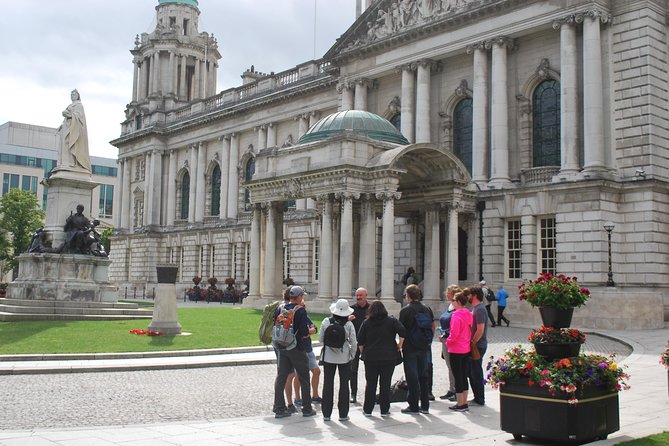
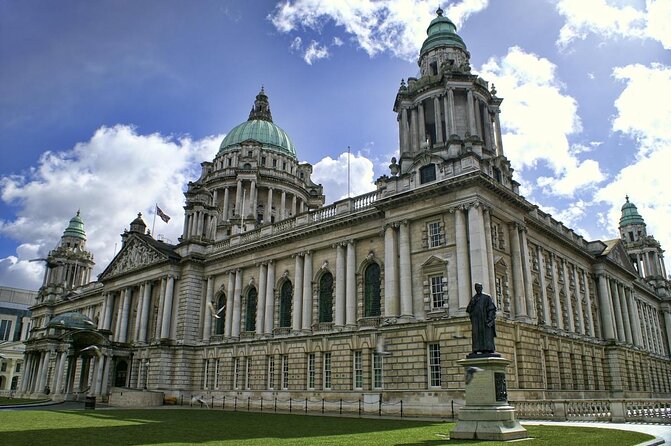
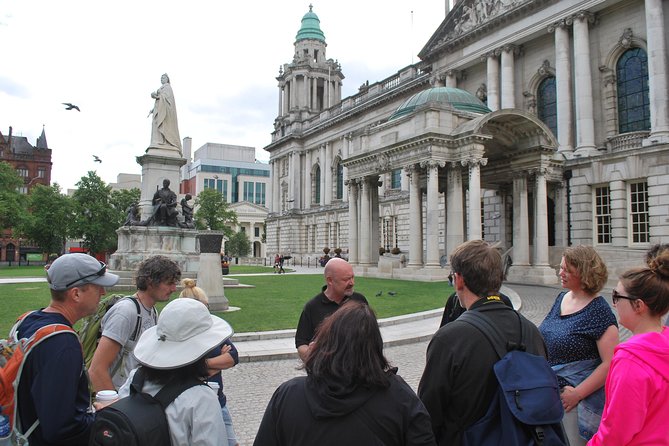
Meet at 10:30 in the grounds of Belfast City Hall, at Donegall Square North. This is a sensible place to begin. The building gives you an immediate sense of Belfast’s civic center, while the open grounds provide room for the guide to gather the group and explain the plan.
The first 20 minutes cover the background that makes the rest of the walk understandable. You hear about the centuries-old relationship between Britain and Ireland, the division between different communities in Northern Ireland, and the reasons violence began to grow in the late 1960s.
This opening is important because The Troubles did not appear out of nowhere. Without some context, the later stories can feel like a string of shocking incidents. With it, you begin to see the political, religious, and social pressures behind the conflict.
You will be standing during this introduction, although the city centre is flat and the total walking distance is modest. If you want a quick look inside City Hall, this tour is not designed for that. Its attention is on the grounds and the city around them.
Donegall Place reveals the danger beneath a shopping street
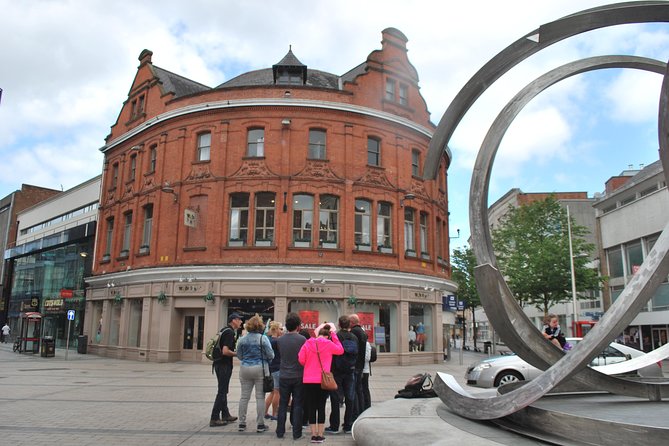
From City Hall, the group moves to Donegall Place, now one of Belfast’s main shopping streets. The setting creates a sharp contrast with the story. Shops and everyday city traffic make it easy to forget that this area was once surrounded by fear and heavy security.
The guide discusses a 1971 bomb attack on a nightclub, the deaths and tragedy that followed, and the creation of the system known as the Ring of Steel. These details show how violence affected places where people went to meet, relax, and enjoy an ordinary evening.
This is a good example of the tour’s method. You do not simply hear a political explanation in a lecture room. You stand in the location and picture how the city operated during the conflict. The story can be upsetting, so this stop may not suit anyone looking for a cheerful introduction to Belfast.
The stop lasts about 15 minutes. Since the tour is focused on listening, you may spend much of that time standing near the guide rather than moving from one sight to another.
Castle Lane brings the conflict into daily life
Castle Lane is another pedestrian shopping area that looks peaceful today. Here, the guide explains what everyday life was like at the height of The Troubles and describes an event that remains firmly fixed in local memory.
The value of this stop is its scale. Major political events can feel distant, but Castle Lane brings the conflict down to the level of streets, shops, workers, and passersby. You begin to understand that the danger was not limited to one neighborhood or one type of building.
The guide’s delivery makes a real difference here. A clear speaker and a good position within the group matter, especially when 25 people are gathered in a city centre. The supplied headsets are a useful feature because they let you listen without crowding tightly around the guide.
One reported problem involved a speaker failing halfway through a tour. The guide did not have a backup, and some people could not hear the rest of the explanation. This appears to be an exception rather than the usual experience, but it is worth knowing that the audio equipment is important to the tour’s success.
More history walks in Belfast:
- Private Political History & Murals Tour Belfast
★ 5.0 · 182 reviews - Belfast Political/history/troubles private taxi/cab tour
★ 5.0 · 69 reviews - 1 Hour Express Belfast Taxi/Cab Tour History, Murals, Troubles
★ 5.0 · 17 reviews - Belfast by the Glass: alternative history of Belfast, sip by sip.
★ 5.0 · 9 reviews
The Spirit of Belfast marks a turning point
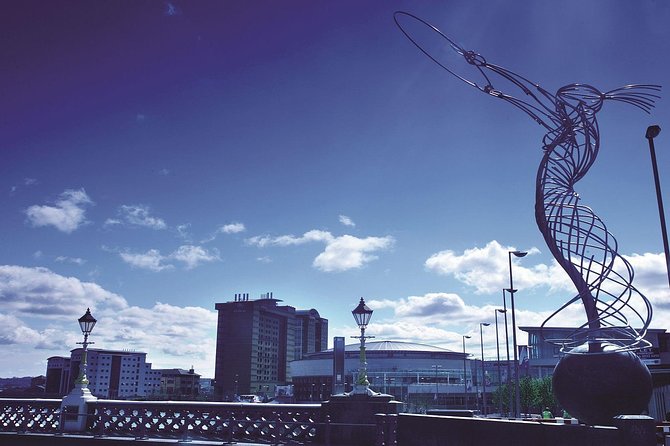
The next stop is the Spirit of Belfast, a public artwork often nicknamed the Onion Rings. The sculpture is intended to represent the resilience of Belfast, though the local nickname is more memorable.
From here, the guide tells a series of events that began in a nearby bar in 1971. Those events helped push Northern Ireland into a rapidly worsening period of violence. The artwork creates a useful visual contrast: an image of endurance and regeneration placed beside stories of how quickly fear and retaliation could spread.
This stop also shows why a walking tour can add something that a general history book cannot. You are not just moving through a list of years. You are seeing how public spaces now used for shopping, nightlife, and meeting friends have changed meaning over time.
The tour does not attempt to turn tragedy into spectacle. Its tone, based on the supplied descriptions, is reflective rather than sensational. Still, you should expect frank discussion of bombings and loss of life.
Cathedral Quarter connects nightlife with the path to peace
The Cathedral Quarter is one of the most appealing sections of the route for a first visit to Belfast. Its lanes and streets now hold bars, nightspots, cultural venues, and street art. The area has been regenerated, but the tour uses it to explain what these streets were like during the 1970s.
The guide covers more major events and begins to trace the movement toward peace. This gives the walk a needed change in direction. The first half explains how violence took hold. Here, you start to see how Belfast moved away from it.
I especially like this part because it helps you read the modern city with sharper eyes. Street art and nightlife are not presented as proof that every problem has vanished. They are signs of change, set against the memory of what came before.
The stop lasts around 20 minutes. You might find the Cathedral Quarter especially useful if you plan to return later for an evening meal or a drink. The tour gives you a sense of the area’s character while also explaining why its present mood cannot be separated from its past.
Ann Street explains policing and today’s border questions
At Ann Street, the group stands beside Belfast’s largest police station. The guide explains how Northern Ireland was policed during The Troubles, how policing changed after the peace agreement, and how Brexit could affect borders and politics.
This is one of the more useful modern sections of the tour. The conflict is not treated as something that ended neatly in the past. The peace agreement changed daily life and public institutions, but questions about identity, sovereignty, and the border remain important.
The discussion is especially helpful if you know the basic story of The Troubles but are less familiar with the political pressures facing Northern Ireland now. The guide connects past security measures to present concerns without suggesting that one simple answer solves everything.
Again, you will spend about 15 minutes listening at the stop. If you prefer a tour with constant movement, this format may feel slow. If you want time to understand the subject, the pauses are useful.
The Beacon of Hope gives the tour a forward-looking finish
The route ends at the Waterfront beside the River Lagan, near the Beacon of Hope. This public artwork is presented as a symbol of resilience and regeneration, making it a fitting final stop.
For about 20 minutes, the guide compares Belfast today with one of the darkest moments in its past. You hear how peace was achieved, why it remains fragile, and what the future might hold.
This ending is one of the tour’s best choices. A walk focused only on bombings and death could leave you with a narrow picture of Belfast. Finishing beside the river, with attention on recovery and political uncertainty, gives the story a wider frame.
The tour ends on Oxford Street, BT1 3NB. From the Beacon of Hope, it is about a five-minute walk back to City Hall, so you are not stranded at the finish. You can also continue exploring the Waterfront from there.
What the $36.06 price delivers
At $36.06 per person, this is not the cheapest way to see Belfast’s center. You can walk between many of these places for free, of course. The price pays for the interpretation, structure, local perspective, and two and a half hours of guided explanation.
I think it offers fair value if The Troubles are a major reason for your visit. A guide can explain links between events that you might miss on your own, and personal accounts add an emotional dimension that signs and plaques rarely provide.
The group can reach 25 people. That is not tiny, but the headsets should make the format workable. The one drawback is that a large group can make it harder to see the guide or find a comfortable place to stand, especially on busy streets.
The tour is offered in English and includes a mobile ticket. It is best suited to people aged 12 and over who can handle serious material. Families with older children may find it educational, but the subject matter should be explained to younger members before booking.
Practical advice for the 10:30 start
Plan to arrive at Belfast City Hall with enough time to find the meeting point in the grounds. The walk covers about 1.5 miles and stays on flat city streets, with no hills or steps listed on the route.
You should wear comfortable footwear, but this is not a strenuous hike. Since the tour takes place outdoors and includes several listening stops, weather matters more than fitness. Bring a waterproof jacket for showers and warm clothing in winter.
The information says the tour operates in all weather, but it also notes that poor weather can lead to cancellation, with a different date or a full refund offered. Check the forecast before setting out.
You can cancel for a full refund up to 24 hours before the start time. Cancellations or changes within 24 hours are not refunded or accepted. Service animals are allowed, and the meeting and ending points are near public transport.
Who should book this tour?
I would book this early in a Belfast visit if you want a clear introduction to the city’s modern political history. The 10:30 start leaves the afternoon free, and the route helps you understand places you may pass again during your stay.
This tour suits adults, older teenagers, history students, and anyone who wants a careful account of both sides of Northern Ireland’s divisions. It is also useful for people who grew up with only one national or family version of the conflict and want a broader account.
You may want a different activity if you prefer architecture, food, music, or a fast-moving sightseeing walk. You should also think twice if bombings, death, and political violence would make your day uncomfortable.
Should you book A History of Terror?
Yes, if you want to understand Belfast beyond its pubs, murals, and attractive center. The tour’s greatest strengths are the real locations, the balanced structure, and guides who can add personal memories to the history. James, Anne, Mylie, Róisín, and other guides have been praised for making difficult material clear and human.
The main cautions are the serious subject, the amount of standing, the outdoor setting, and the possibility of an audio problem. At $36.06, it earns its price when you value explanation and context more than simply ticking off sights.
Book it if you want Belfast to make more sense. Skip it only if you are looking for a light city walk with little political discussion.
FAQ
Where does the tour start?
The tour starts at Belfast City Hall, Donegall Square North, Belfast BT1 5GS, UK.
Where does the tour end?
It ends at the Beacon of Hope on Oxford Street, Belfast BT1 3NB. The walk back to City Hall takes about five minutes.
What time does the tour begin?
The scheduled start time is 10:30 am.
How long is the walking tour?
The tour lasts approximately two hours and 30 minutes.
How far do you walk?
The route covers about 1.5 miles. Belfast city center is flat, with no hills or steps listed on the route.
What language is the tour offered in?
The tour is offered in English.
Is the tour suitable for children?
The minimum age is 12 years.
Are headsets included?
Yes. Headsets are provided so you can hear the local guide clearly.
Can I cancel for a full refund?
Yes, if you cancel at least 24 hours before the experience start time. Cancellations or changes made within 24 hours are not refunded, and poor-weather cancellations offer a different date or a full refund.
More Walking Tours in Belfast
- Belfast Political Tour-Conflicting Stories Walking Tour
★ 4.5 · 459 reviews - Best of Belfast Walking Tour
★ 5.0 · 399 reviews - Belfast Eclectic Walking City Center Experience, The Marti Way
★ 5.0 · 348 reviews - Belfast Troubles Murals Street Art and Peace Wall Walking Tour
★ 5.0 · 163 reviews
Just added around Belfast
- Game of Thrones scene location inc Giants causeway from Belfast★ 5.0 · 3 reviews
- Belfast history of terror & mural 1 hr express private taxi tour★ 5.0 · 3 reviews
- Giants Causeway Tour From Belfast including Game of thrones sites★ 5.0 · 3 reviews
- Experience the Antrim Coast and the Land of Giants – Private Tour★ 5.0 · 3 reviews
- Private Coast Tour in Belfast★ 5.0 · 3 reviews
- Belfast & Giants Causeway Luxury Mercedes Private Tour for 6 pax★ 5.0 · 3 reviews
- Belfast to Dublin Transfer★ 5.0 · 3 reviews
- Belfast City Airport (BHD) to Belfast Accommodation – Arrival Private Transfer★ 5.0 · 3 reviews
Walking Tours, compared.
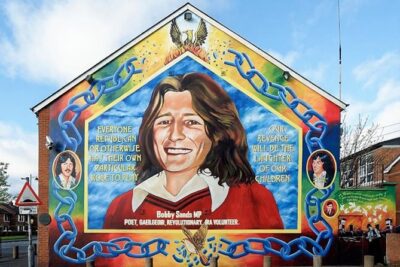
Belfast Political Tour-Conflicting Stories Walking Tour
See the full review →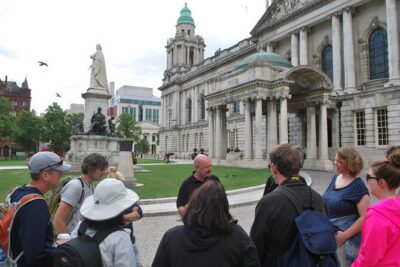
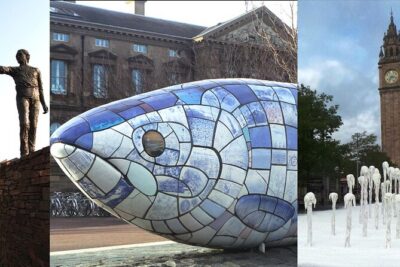
Belfast Eclectic Walking City Center Experience, The Marti Way
See the full review →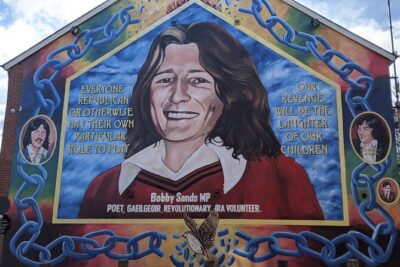
Belfast Troubles Murals Street Art and Peace Wall Walking Tour
See the full review →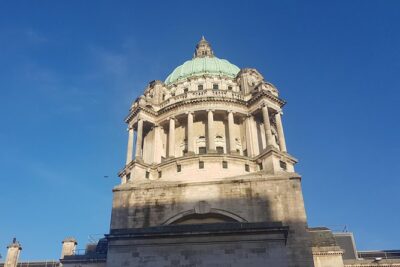
The Real Eclectic Belfast City Walking Tour/Experience.
See the full review →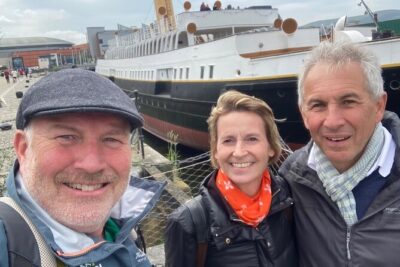
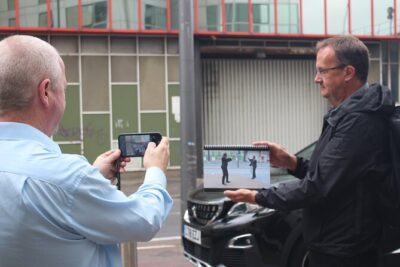
Belfast Line of Duty Walking Tour with Private Guide
See the full review →
Browse the lists this tour appears in