
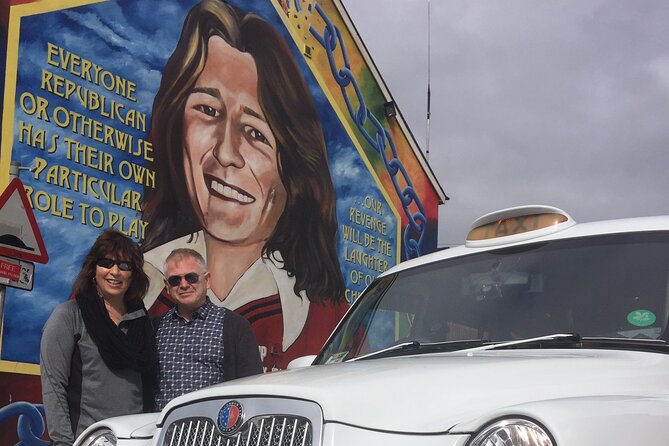
Reviewed · BELFAST BLACK TAXI & MURAL TOURS
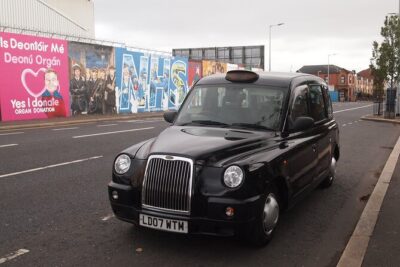
Express Terror and Peace 90 min Private Belfast Cab /Taxi Tour
Belfast’s past is painted across its walls, and this private black cab tour puts you close to the places where that past unfolded. I like the way it links major murals with real streets, including Bombay Street, the Bobby Sands mural, Divis, and the Shankill Road. I also like having a private taxi, since you can ask direct questions and spend your time on the subjects that matter most to you.
The main drawback is the emotional weight. This is not a light sightseeing ride. The stories cover displacement, prison life, hunger strikes, paramilitary groups, killings, and the slow work of peace. The advertised timing also needs a little care: the experience is described as 90 minutes in its title, but the practical details say about two hours.
Key points to know before booking
- A private black cab gives you more ground than a walking tour: You travel between Belfast’s divided communities without losing time on long road crossings.
- The Bobby Sands mural is a central stop: Your guide explains the 1981 hunger strike and the political meaning of this famous image.
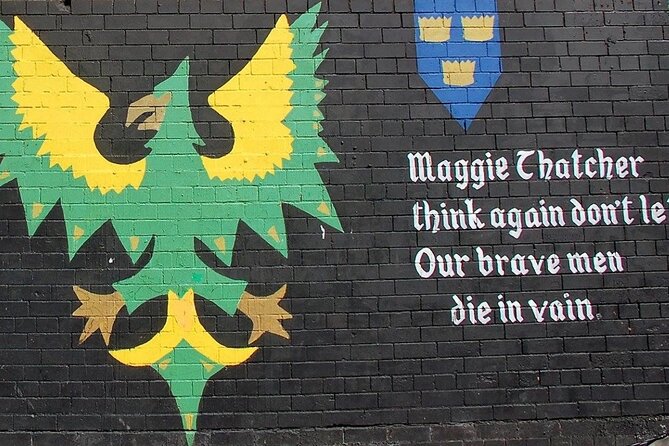
- You see both republican and loyalist areas: Falls Road and Bombay Street are balanced by the Shankill Road and its loyalist murals.
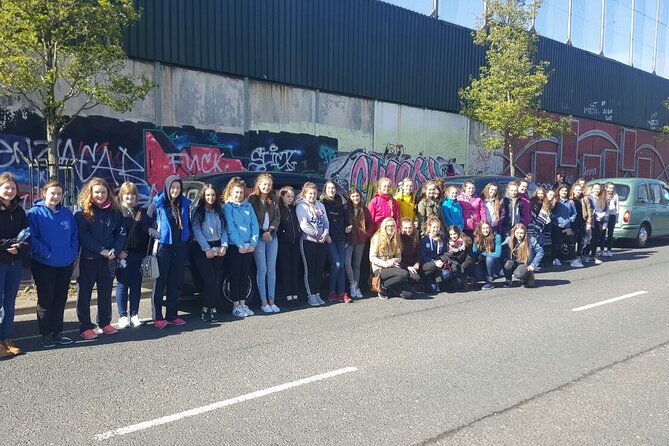
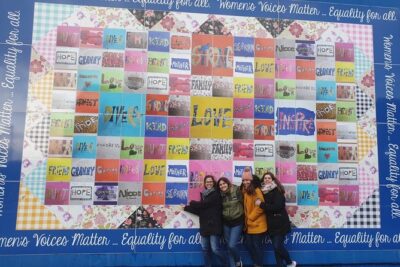
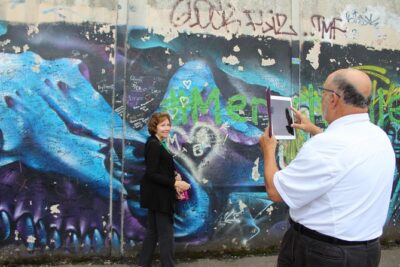
- The Peace Wall is still part of daily Belfast: You can see the barriers, read messages for peace, and consider why they remain in place.
- Guiding is the heart of the experience: Jim has been praised for giving a careful, detailed account, while another guide was described as an accomplished historian who explained Northern Ireland’s current politics with care.
- Pickup is limited but simple: Free collection is available within 1 kilometer of Belfast City Hall, with airport, station, and cruise port pickups either unavailable or subject to a cash surcharge.
Why a black cab is the right way to see Belfast’s divided streets
Belfast’s key political sights are spread across several neighborhoods. You can walk sections of the Falls Road or Shankill Road, but the full story makes more sense when you connect them by taxi.
A private black cab keeps the tour focused. You are not waiting for a large group to gather or trying to hear a guide over traffic. You can ask why a particular mural matters, pause for a photo, or request more context about a place that catches your attention.
The format also gives you a useful contrast. The tour crosses from republican west Belfast to loyalist west Belfast, then brings in places linked to prisons, peace talks, and the British military presence. That range is important, since a one-sided mural tour can leave you with only half the story.
Expect a serious lesson rather than a polished city sightseeing loop. The strongest part of the experience is the guide’s ability to connect buildings and streets with political choices, family memories, and events that shaped modern Northern Ireland.
Other black taxi and mural tours:
- Cab Tours Belfast Famous Black Taxi Tours
★ 5.0 · 3,633 reviews - Private Black Taxi Belfast City Tour
★ 5.0 · 2,188 reviews - Belfast’s Political Mural Taxi Tour
★ 5.0 · 1,180 reviews
Divis and the opening chapter of the Troubles
The tour begins around Divis Flats, at the mouth of the Falls Road. This area is linked to the riots of 1966, events that helped lead into the period known as the Troubles.
The Divis Flats were also occupied by the British Army until 2007. That detail helps explain the military presence that once shaped daily life here. You are not simply looking at old apartment blocks. You are seeing a place that became a symbol of conflict, surveillance, and contested control.
The stop is brief, about 10 minutes, so do not expect a long walk through the area. The value comes from the guide’s explanation and from seeing where the Falls Road story begins. If you want a gentler introduction to Belfast, this opening can feel abrupt. If you want direct context, it sets the tone well.
More than 60 murals on Divis Street
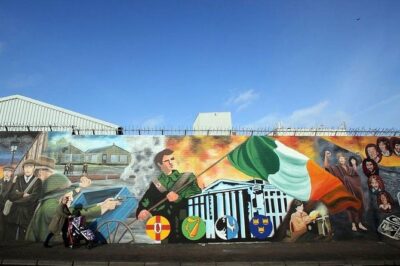
The International Mural Wall on Divis Street gives you a wider view of how Belfast’s walls are used to discuss politics beyond Northern Ireland. The collection changes over time and has included subjects such as Nelson Mandela, Ukraine, and Palestine.
This matters because the wall is not limited to local conflict. It places Belfast’s political art in a wider world. The murals present competing points of view and underline that public art can explain, persuade, commemorate, and sometimes challenge the person looking at it.
You have roughly 15 minutes here. That is enough for photos and a clear explanation, though anyone interested in mural art could easily want longer. Bring a phone or camera, but give the guide your attention too. The images are striking, yet the political background is what turns this from a photo stop into a useful part of the tour.
Bombay Street and the origins of displacement
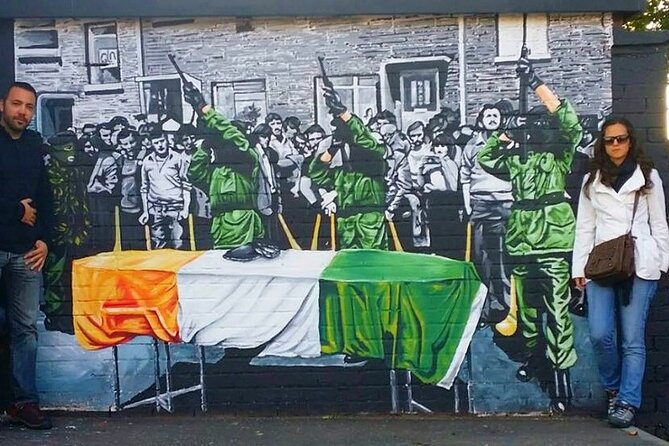
Bombay Street is one of the most important stops for understanding the violence of 1969. Thousands of people were displaced and homes were burned, and the Provisional Irish Republican Army emerged from this period.
The wording of the history here requires care. This is not presented as a simple story with one cause and one side. Your guide explains the circumstances around the street, the police and loyalist role described in the tour, and the way local fear and displacement fed into armed politics.
A 15-minute stop is enough to grasp why the street became such a powerful symbol. It is also a place where photographs can feel inadequate. I would listen first and take pictures second. The point is not just to record a wall or street sign, but to understand why Bombay Street remains part of Belfast’s political memory.
A few more Belfast half-days to weigh up
- From Belfast: Giant’s Causeway Full-Day Guided Trip
★ 4.8 · 6,361 reviews - Titanic Belfast Entrance Ticket: Titanic Visitor Experience Including SS Nomadic
★ 4.5 · 3,698 reviews - A History of Terror – Belfast City Centre Walking Tour
★ 5.0 · 2,883 reviews - Game of Thrones and Giant’s Causeway Full-Day Tour from Belfast
★ 5.0 · 2,291 reviews
The Bobby Sands mural and the 1981 hunger strike
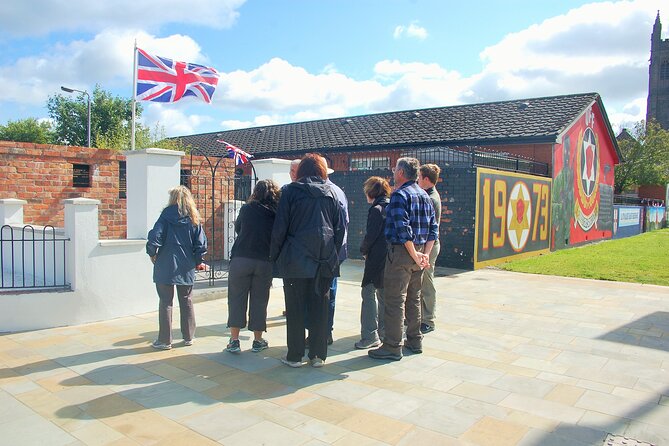
The Falls Road Library faces the famous Bobby Sands mural. Sands was an IRA volunteer and member of Parliament who died during the 1981 hunger strike. The mural has become one of the most recognized political images in Belfast and perhaps the most famous stop on this route.
Your guide explains the hunger strike and the building’s earlier use as a Royal Irish Constabulary and Black and Tans station. That layering gives the stop unusual force. The same location connects British security history, republican commemoration, and the public memory of Sands.
You have about 15 minutes here. The stop works best if you are prepared for a political explanation, not just a quick photo. The mural carries different meanings depending on your viewpoint, and a good guide should explain its place in republican identity without pretending that the subject is free of controversy.
This is one of the moments when guide quality matters most. Jim has been singled out for taking time to explain everything and adding useful context. Another guide was praised for giving a nuanced account of Northern Ireland’s current political situation. Those descriptions suggest the tour is strongest when you engage with the conversation instead of treating the cab as a moving photo booth.
Clonard Monastery and secret peace talks
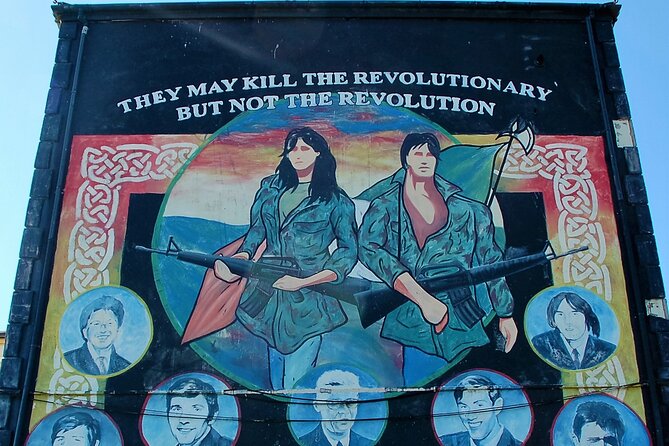
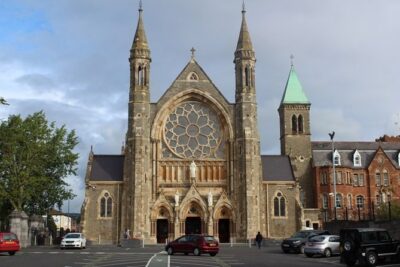
Clonard Monastery brings the tour away from murals and into the story of negotiation. The monastery hosted secret peace talks between Gerry Adams and John Hume. It was later discovered that MI5 had bugged the building.
The monastery was built more than 100 years ago by local people and Italian workers. Its altar is said to be made from local women’s wedding rings, a striking detail that gives the building a personal connection to the community.
You spend around 15 minutes here. The site helps show that peace did not arrive through a single public event. It involved private talks, mistrust, religious spaces, political figures, and back-channel efforts. For many people, this is the most surprising stop because it shifts attention from street conflict to the difficult work of communication.
The Peace Wall and Belfast’s unfinished peace
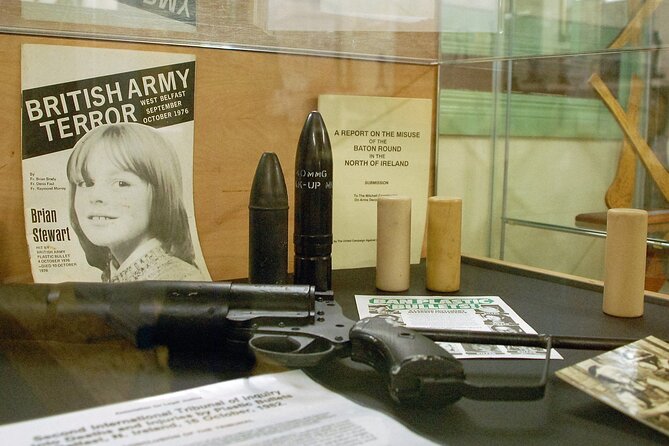
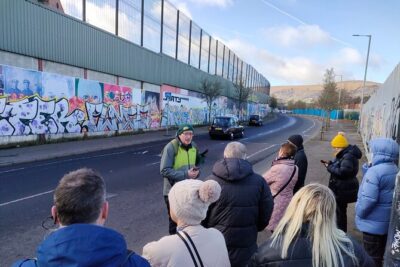
The Peace Wall is one of Belfast’s clearest reminders that the conflict is not simply a closed chapter. The first major walls were put up by the British Army in 1969, and barriers still remain in parts of the city.
You can see messages written by presidents, celebrities, and ordinary people who have called for peace. The writing creates a hopeful contrast with the concrete and gates. At the same time, the wall itself raises a hard question: if peace has been reached, why is a barrier still needed?
That tension is the point. The stop shows both progress and unfinished business. You may find it moving, but you should not expect a tidy answer from the visit. The tour gives you a chance to think about how communities can live together while still marking boundaries and protecting local identities.
The stop lasts about 15 minutes. If you have mobility concerns, ask when booking how close the taxi can get to the areas where you want to stand, since the supplied details do not give a specific accessibility plan.
Crumlin Road Gaol and the courthouse
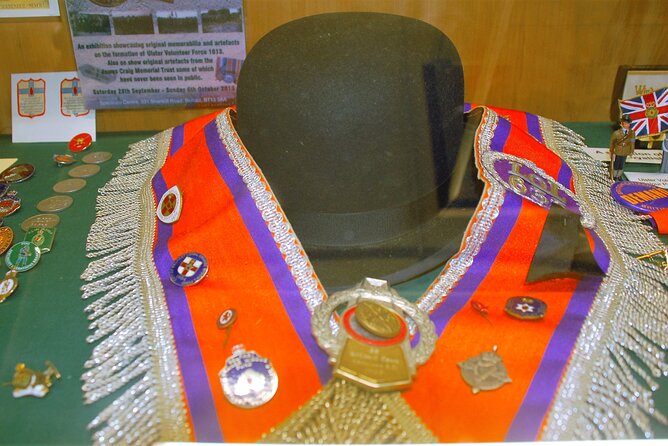
The Crumlin Road Gaol and courthouse add a prison and security dimension to the route. The gaol was built in the 1800s and operated as a hanging jail until the 1960s.
During the Troubles, it was linked to successful IRA escapes and RPG attacks. The courthouse opposite also became part of the conflict story. Even if you only see the buildings from outside, the setting helps you picture how law, imprisonment, and armed resistance overlapped in Belfast.
The tour information does not assign a separate stop duration here, so your guide may cover it while driving or combine it with the surrounding route. If you want a full interior prison visit, this taxi tour is not described as one. Its purpose is to provide historical context from the street.
Shankill Road and the loyalist point of view
The move to Shankill Road is essential. After republican areas and symbols, you see a major loyalist district and hear about the British and unionist side of Belfast’s story.
Shankill is described as having lower and upper sections and as one of Belfast’s oldest roads, with roots reaching back to 445 AD. It is also associated with the UVF and UFF. Your guide explains the story from William of Orange to the present day, helping you understand how religion, monarchy, national identity, and local politics remain tied together.
If you visit close to July, you may see one of the area’s notorious bonfires. The timing can add visual context, though it can also make the subject feel more charged. Bonfires and parades are important expressions of loyalist identity, but they are also contested. Listen for the distinction between tradition, celebration, and political statement.
The Shankill stop lasts about 15 minutes. It is a strong counterweight to the Falls Road section, and it makes the private format especially useful. You can ask questions about differences between the two communities without feeling that you are performing for a busload of strangers.
Loyalist murals and the final photo stop
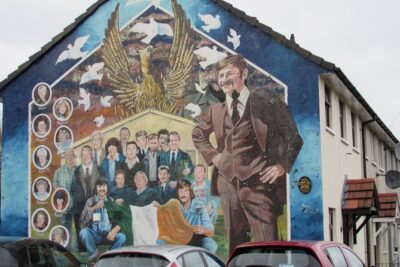
The Shankill Graveyard area gives you another chance to photograph loyalist murals and images tied to British history. These walls are not decorative filler. Like the murals on Divis Street, they select heroes, symbols, battles, and political claims.
Seeing both sets of murals helps you compare how communities tell their own stories. The tour does not ask you to accept every claim painted on a wall. Instead, it gives you a basis for asking who created the image, whom it honors, and what it leaves out.
Allow about 15 minutes here. The photo opportunity is useful, but the stop’s larger value is balance. You finish with a clearer sense that Belfast’s murals are competing public histories, not a single shared record.
Price, timing, and what you receive
The listed cost is $178.26 per person. For a solo participant or a couple, that is a serious price for roughly two hours. For a larger private group, the cost may feel more reasonable because the vehicle and guide are dedicated to your party rather than shared with other people.
The value rests in the guide, not admission tickets. Every listed stop is free, so you are paying for local interpretation, transportation between neighborhoods, privacy, and the ability to cover a lot of ground. A walking route may cost less, but it will not offer the same reach or let you move between the Falls and Shankill areas as efficiently.
The duration needs clarification before you book. The title calls it a 90-minute tour, while the summary and stop schedule describe about two hours. The listed stop times alone add up to a long session, especially once driving is included. Confirm the expected length if you have a tight schedule.
Pickup is free within a 1 kilometer radius of Belfast City Hall. The operator can collect you at the front gates of City Hall. Cruise ship passengers are not collected directly because the port is several miles outside the city center, but the cruise shuttle bus stops near Visit Belfast, across from City Hall. Airport, train station, and cruise port pickups may involve a cash surcharge on the day, and the supplied details specifically say cruise pickup is not offered.
You receive confirmation when booking, and the activity is offered in English. Children must be accompanied by an adult. Most people can take part, and the booking is private for your group alone.
Who should book this Belfast cab tour?
I would choose this for a first visit to Belfast if you want political context fast and prefer a direct conversation with a local guide. It suits people who want to understand the Troubles through places, not just museum displays.
It is also a good choice for families with older children, provided everyone is ready for difficult subjects. The private taxi lets you adjust the conversation, although the adult must accompany children and the subject matter is not child-friendly in a carefree sense.
History students, photographers, and people interested in peace processes will get the most from it. The tour connects murals, prisons, military barriers, community identity, and negotiations in one compact route.
I would skip it if you want a relaxed introduction to Belfast’s architecture, food, or music. I would also think twice if you dislike political discussion or find stories of violence upsetting. This experience asks you to pay attention and accept that some questions remain unsettled.
Free cancellation is available up to 24 hours before the start time. Cancel later than that and you do not receive a refund, while changes made inside the 24-hour window are not accepted.
Should you book it?
Book this private Belfast cab tour if the city’s modern political story is your main reason for visiting. Its best features are the balanced route through republican and loyalist districts, the Bobby Sands mural, the Peace Wall, and the chance to question a guide in a private setting.
The price is harder to justify for one person, and the 90-minute title versus two-hour description should be cleared up. Still, for a small group that wants a focused, serious introduction to the Falls, Shankill, murals, and peace process, this is a practical way to see the places that shaped Belfast.
FAQ
Where does the tour begin?
The activity begins in Belfast and ends back at the meeting point. Free pickup is offered within a 1 kilometer radius of Belfast City Hall.
Can I be picked up at Belfast City Hall?
Yes. The operator can collect you at the front gates of Belfast City Hall. You should confirm this pickup request when booking.
Does the tour pick up from a cruise ship port?
No direct cruise ship pickup is offered because the port is several miles outside Belfast city center. The cruise shuttle bus leaves you near Visit Belfast, across the street from City Hall, where pickup can be arranged.
Is airport or train station pickup included?
Airport and train station pickup is not included in the stated free city-center pickup. A surcharge may apply and must be paid in cash on the day.
How long does the experience last?
The title describes a 90-minute private tour, while the practical tour details describe approximately two hours. Confirm the expected duration before booking if your schedule is tight.
Is this a private tour?
Yes. Only your group takes part in the activity, and you do not share the taxi with other groups.
What language is the tour offered in?
The tour is offered in English.
Can children join the tour?
Yes, children can participate, but they must be accompanied by an adult. The tour covers serious subjects connected with the Troubles, including violence, imprisonment, hunger strikes, and displacement.
Just added around Belfast
- Belfast history of terror & mural 1 hr express private taxi tour★ 5.0 · 3 reviews
- Game of Thrones scene location inc Giants causeway from Belfast★ 5.0 · 3 reviews
- Giants Causeway Tour From Belfast including Game of thrones sites★ 5.0 · 3 reviews
- Experience the Antrim Coast and the Land of Giants – Private Tour★ 5.0 · 3 reviews
- Belfast to Dublin Transfer★ 5.0 · 3 reviews
- Private Coast Tour in Belfast★ 5.0 · 3 reviews
- Belfast & Giants Causeway Luxury Mercedes Private Tour for 6 pax★ 5.0 · 3 reviews
- Belfast City Airport (BHD) to Belfast Accommodation – Arrival Private Transfer★ 5.0 · 3 reviews
Belfast Black Taxi & Mural Tours, compared.
Cab Tours Belfast Famous Black Taxi Tours
See the full review →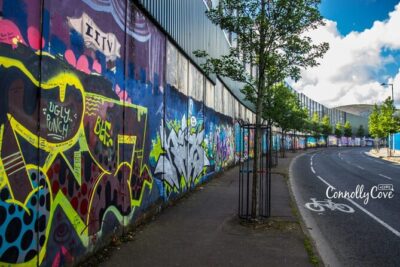
Browse the lists this tour appears in