
Reviewed · BELFAST TOURS
Private Belfast Explore Like a Local
Belfast’s story comes into sharp focus at the Peace Wall, where a short drive takes you from the republican Falls Road to the loyalist Shankill Road. This private tour links that difficult past with Belfast’s softer side: Botanic Gardens, Queen’s University, the Big Fish, Titanic Quarter, and Belfast Castle.
I like the private format, which lets you ask direct questions and adjust the pace. I also like the hotel or cruise-ship pickup, since your guide handles the driving while you watch the city unfold. The main drawback is price: at $638.11 per person, this is a costly way to spend roughly three hours, especially when most stops are brief photo visits.
Key points to know before booking
- The Peace Wall and political murals get the most attention, with visits to Falls Road, Shankill Road, Bobby Sands’ mural, Divis, and Clonard.
- Guides Barry and Joe are noted for personal, passionate accounts of Belfast’s troubled decades, though one account found the political commentary too sympathetic to the IRA.
- The private vehicle saves time, covering far more ground than you could comfortably walk in three hours.
- Most of the 21 stops are short, often 5 to 30 minutes, so this is a city overview rather than a museum-heavy tour.
- Belfast Castle is the longest scenic stop, but admission is not included.
- Central hotel and cruise-ship pickup is included, while airport pickup and drop-off are not.
Why this private Belfast tour works best as an introduction
This experience is built around contrast. In one outing, you see leafy Queen’s Quarter, working-class West Belfast, the old docklands, and the grand Victorian center. That range matters because Belfast can feel like several cities joined together by short car rides.
The guide is the key to making those changes meaningful. A street of murals can look like an outdoor art trail until someone explains the symbols, the communities behind them, and the events they remember. A wall can seem like a civic oddity until you understand why gates still close at night.
The tour lasts about 2 hours 40 minutes to 3 hours. That is enough time for a useful orientation, but not enough for long visits inside major attractions. You will see the outside of Titanic Belfast and SS Nomadic, for example, but admission to those sites is not included.
Because the vehicle is private, you can ask questions without worrying about a bus full of strangers. Guides named Barry and Joe have led this experience, and the strongest praise centers on their ability to explain the Troubles in personal, human terms. That also makes the guide’s outlook important. One account found the political commentary strongly favorable toward the IRA, so you should be ready to hear a particular interpretation rather than a perfectly neutral lecture.
A few more Belfast half-days to weigh up
- From Belfast: Giant’s Causeway Full-Day Guided Trip
★ 4.8 · 6,361 reviews - Titanic Belfast Entrance Ticket: Titanic Visitor Experience Including SS Nomadic
★ 4.5 · 3,698 reviews - Cab Tours Belfast Famous Black Taxi Tours
★ 5.0 · 3,633 reviews
Botanic Gardens and Queen’s University: Belfast’s gentler side
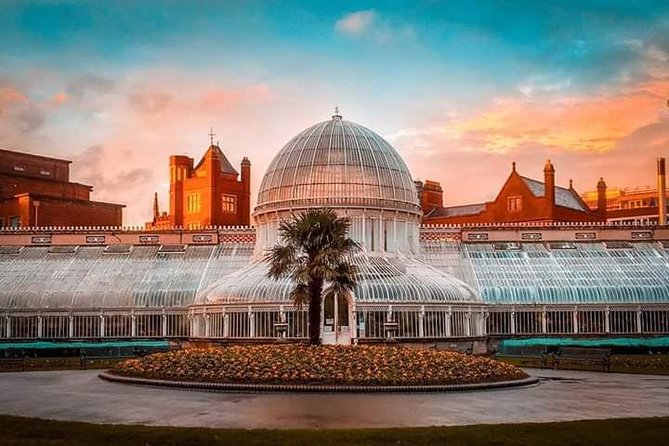
The tour often begins in south Belfast at Botanic Gardens, a welcome change from the political material that follows. Established in 1828, the 28-acre park was first a private botanical garden before becoming a public park in 1895.
You will have about 30 minutes here, with admission included. The Palm House is the main attraction. Completed in 1840, it is one of the earliest curving cast-iron-and-glass conservatories in the world. The Tropical Ravine and older plant collections add to the Victorian character.
This is not just a garden for sightseeing. It remains a meeting place for residents, students, and office workers, and it hosts concerts, festivals, and other events. The nearby Ulster Museum and Queen’s University give the area a lively academic feel, although neither is part of the scheduled visit.
A short stop at Queen’s University Belfast follows. The university opened as Queen’s College in 1849, and its Lanyon Building gives the Queen’s Quarter much of its visual appeal. You get about 15 minutes here, enough for a look and a few photographs rather than a campus tour.
I like this opening because it gives you social and architectural context before the tour turns to conflict. The limitation is simple: if you want to explore the Palm House or university grounds at leisure, you will need to return on your own.
Rise and Divis: symbols beside the old fault line
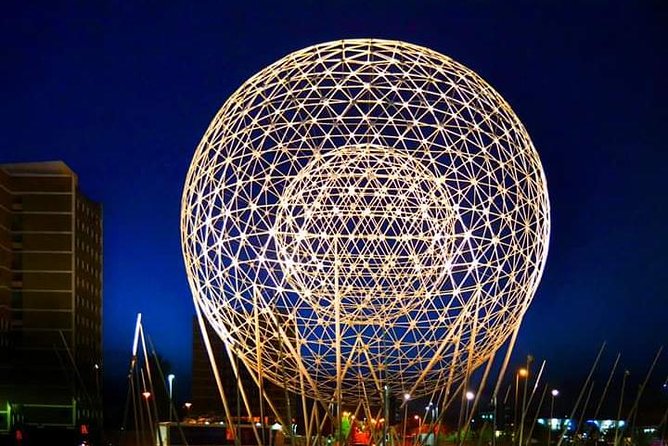
The Rise sculpture is a quick 10-minute stop at the Broadway roundabout, where the Westlink and M1 meet. The huge steel sphere, designed by Wolfgang Buttress, is about 37.5 meters high and 30 meters wide. Its local nicknames include The Balls on the Falls and The Westicles.
This is public art on a giant scale, built beside one of Belfast’s busiest road junctions. You will not spend long here, but the sculpture is easy to photograph and gives you a sense of how modern Belfast marks its gateways.
The mood changes at Divis Tower, near the meeting point of Falls Road and Shankill Road. The 20-floor tower was built in 1966 as part of a housing complex and became a flashpoint during the Troubles. A British Army observation post occupied the top floors during the 1970s and was later removed, with the upper floors returned to residential use in 2009.
The guide’s explanation is more important here than the building itself. Divis Tower is tied to the death of Patrick Rooney, a nine-year-old killed in 1969, and the 1981 death of INLA sniper Emmanuel McClarnon. You get about 15 minutes, so expect a roadside account rather than an interior visit.
This is one reason a private guide can add real value. The facts are painful and politically charged, and a good explanation helps you understand why a housing tower became a symbol of state force, armed resistance, and civilian loss.
The Peace Wall and Falls Road: history you can still see
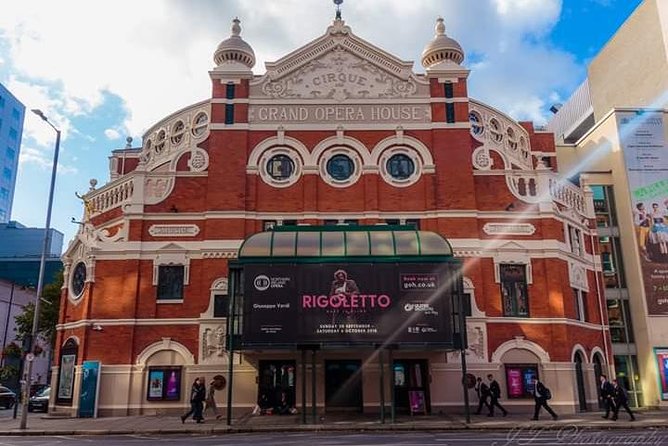
The two scheduled Peace Wall stops, each about 30 minutes, are the core of the experience. The walls and related barriers separate mainly republican and nationalist Catholic neighborhoods from mainly loyalist and unionist Protestant neighborhoods.
Some barriers reach up to 8 meters high. Gates may open during the day and close at night. They were first built in 1969 as temporary measures, but many remain. Their continued presence is a blunt reminder that the Good Friday Agreement did not erase every physical division.
You can usually leave your name or a message of peace and hope on the wall. That small act can feel more personal than simply taking a photograph. It also gives you a moment to consider the gap between peace as an agreement and peace as daily life.
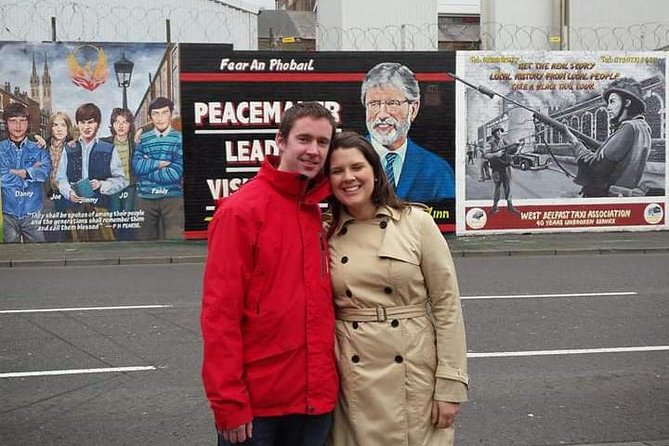
The tour moves through Falls Road, the main route through republican West Belfast, where murals cover walls and gables. Some focus on the 1981 hunger strike or Bobby Sands. Others express solidarity with international causes or remember particular killings and injustices.
The subject deserves care. The Troubles resulted in more than 3,600 deaths and about 50,000 injuries, with roughly half the deaths occurring in Belfast. Your guide will give you a local account of how the conflict affected streets and families, not just a timeline of political events.
At the same time, no short tour can present every viewpoint in equal depth. If political balance matters greatly to you, ask questions from more than one angle and treat the guide’s account as one informed perspective.
Same city, a completely different day out:
- A History of Terror – Belfast City Centre Walking Tour
★ 5.0 · 2,883 reviews - Game of Thrones and Giant’s Causeway Full-Day Tour from Belfast
★ 5.0 · 2,291 reviews - Private Black Taxi Belfast City Tour
★ 5.0 · 2,188 reviews - City Sightseeing Belfast Hop-On Hop-Off Bus Tour
★ 4.5 · 2,012 reviews
St. Peter’s Cathedral and the Bobby Sands mural
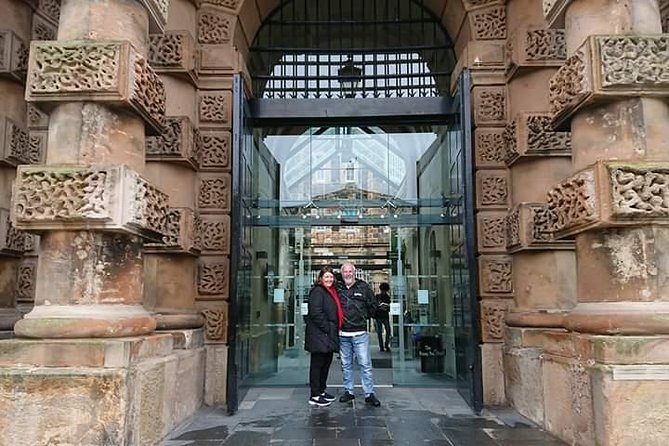
St. Peter’s Cathedral sits in the Divis Street area and has served as the Roman Catholic cathedral for the Diocese of Down and Connor since 1986. Construction began in the 1860s, and the twin spires were added in 1886.
You get about 20 minutes here, with admission included. The Scrabo sandstone exterior, Scottish sandstone details, and hammer-beam ceiling reflect the ambition of a church built for Belfast’s growing post-Famine Catholic population. It is a Grade A listed building.
The cathedral adds religious and community context to the tour. Belfast’s divisions were political, national, and economic, but they were also lived through churches, schools, housing estates, and local institutions.
The nearby Bobby Sands mural is a 10-minute photo stop. Sands led the 1981 hunger strike and died while imprisoned in the Maze. The mural’s phoenix, broken chain, lark, and uncrowned harp carry specific republican meanings.
You do not need to agree with Sands’ politics to understand why the image matters. It is one of Belfast’s most recognizable political murals and a clear example of how public art can preserve memory, honor sacrifice, and shape a community’s identity.
Clonard and Shankill Road: two communities close together
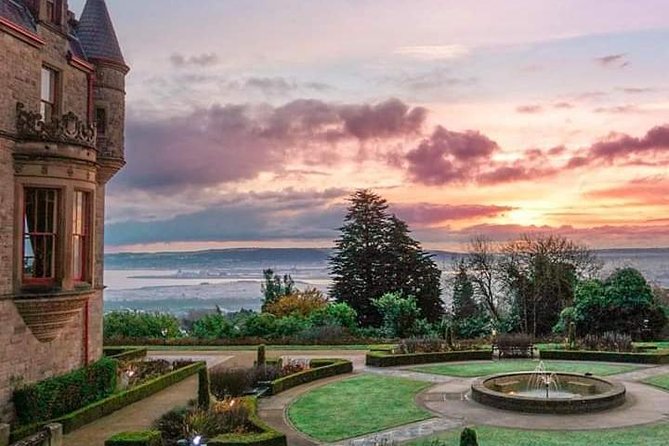
The Clonard Martyrs Memorial Garden commemorates republican volunteers and civilians from the wider Clonard area. It also records deaths from earlier periods, including 1916 to 1970. The garden includes a Celtic cross, memorial plaques, provincial symbols, and lists of names.
The stop lasts about 15 minutes. It is a compact, solemn place, and the inscriptions reflect a distinctly republican view of the conflict. Pay attention to the wording, because memorials reveal not only who died but also how a community understands responsibility.
At Clonard Monastery, you get about 10 minutes. The Redemptorist monastery is associated with a striking Second World War story: during the Belfast Blitz, more than 300 Protestants from the nearby Shankill area sheltered in its crypt.
That detail complicates the simple Catholic-Protestant divide. It shows how people sometimes offered protection across community lines even when politics and violence pushed them apart.
The tour then reaches Shankill Road, the main thoroughfare of a predominantly loyalist area. You will see another side of Belfast’s political identity, including the neighborhood’s association with Ulster loyalism and unionism.
The two roads are close geographically, yet their murals, memorials, flags, and stories can feel worlds apart. I find this one of the most useful parts of the tour because the guide can explain the geography of separation while you are actually moving through it.
Mural walls and the limits of a short political tour
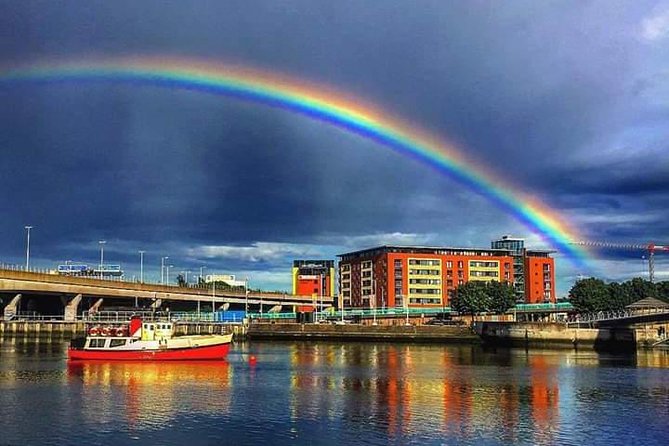
The International Mural Wall on Divis Street adds a wider political frame. Murals there may refer to the Iraq War, the Arab-Israeli conflict, the Spanish Civil War, Donald Trump, or international revolutionary movements.
Northern Ireland’s murals are not a single art style or unified history. They are public statements, memorials, warnings, and political arguments. Almost 2,000 murals have been documented across Northern Ireland since the 1970s, with many concentrated in Belfast and Derry.
You have about 30 minutes for this part of the route, but the exact viewing time will depend on traffic and the pace of the private drive. The tour is strongest when you ask what a symbol means and why a particular image appears in that neighborhood.
The drawback is that the itinerary contains repeated mural and Peace Wall stops. That is useful if the Troubles are your main reason for booking, but it may feel repetitive if you mainly want architecture, food, or museums.
Belfast Castle and the city views from Cavehill
Belfast Castle sits on the lower slopes of Cavehill Country Park, about 400 feet above sea level. Its position gives you wide views over Belfast and Belfast Lough, making it the tour’s best scenic pause.
The present building was created between 1811 and 1870 in Scottish baronial style by Charles Lanyon and his son. The Chichester family later gave it to the City of Belfast in 1934. A major refurbishment took place from 1978 to 1988.
The castle’s cat theme is a playful touch. The gardens contain nine cats in sculptures, mosaics, and clipped shrubs, based on the old belief that a cat living at the castle brings good fortune.
You get about 30 minutes here, but admission is not included. That makes the stop more of an exterior visit and viewpoint unless you choose to pay separately. The castle is also not in the center, so the private vehicle is particularly useful for reaching it within a three-hour route.
Clock tower, Big Fish, and Titanic Quarter
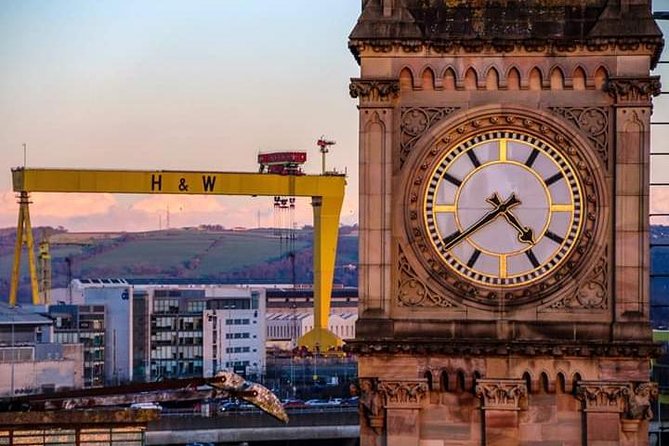
Back toward the center, the Albert Memorial Clock gives you a quick look at Belfast’s Victorian civic architecture. Completed in 1869, the 113-foot tower was built on wooden piles over reclaimed marshland and now leans about four feet.
Local humor says it has the time and the inclination. You get about 10 minutes, enough to admire the Gothic details, lions, and statue of Prince Albert.
The Big Fish, also called the Salmon of Knowledge, is a 10-minute stop on Donegall Quay. The 10-meter ceramic sculpture is covered in tiles printed with images and texts about Belfast. A time capsule inside holds information, images, and poetry about the city.
In Titanic Quarter, you will see the Samson and Goliath cranes, the enormous Harland & Wolff shipyard landmarks. Goliath was completed in 1969 and Samson in 1974. Despite the common assumption, these cranes did not build the Titanic because they came later.
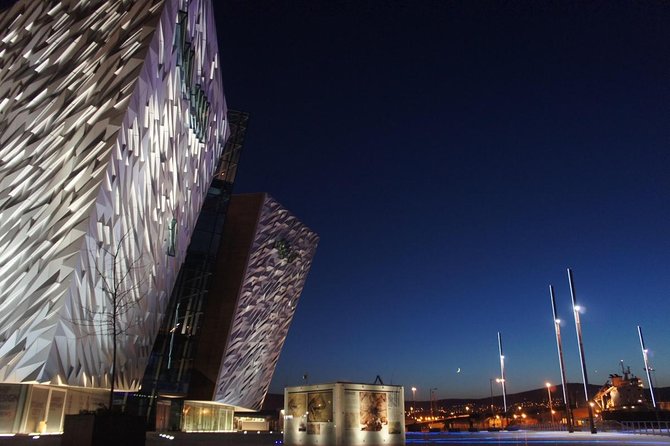
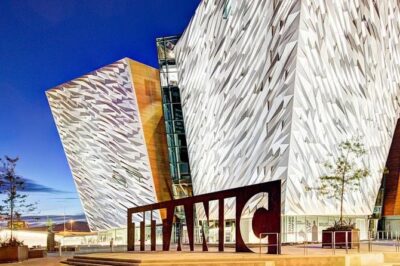
You then get photo stops at SS Nomadic and Titanic Belfast. Nomadic was launched in 1911 to carry passengers and mail to the Olympic and Titanic, and it is the only surviving White Star Line vessel. Titanic Belfast is the major attraction of the waterfront redevelopment, but museum admission is not included and the visit here lasts only about 10 minutes.
If you want to tour Titanic Belfast properly, plan a separate visit. This experience helps you locate it and understand its place in Belfast’s shipbuilding story, but it cannot replace the museum.
The Crown and a final look at Belfast’s contrasts
The tour ends at the Crown Liquor Saloon, a famous Victorian pub on Great Victoria Street. Refurbished in 1885, it is one of Northern Ireland’s finest surviving gin palaces, with ornate decoration and a long connection to Belfast’s social life.
The final 30-minute stop is a pleasant change after the serious political material. You can have a drink and reflect on the day, though the cost of refreshments is not specified and should be treated as extra.
The route may also include BT9 6RU, Belfast’s affluent Malone area, where you can see large homes and a very different standard of living from the working-class districts visited earlier. That contrast is worth noting. Belfast’s story is not only Catholic versus Protestant. Class, housing, industry, religion, and national identity all overlap.
Is $638.11 per person fair value?
At $638.11 per person, this is expensive for a tour lasting under three hours. Its value depends heavily on your group size and priorities. You are paying for a private vehicle, central hotel or cruise-ship pickup, a qualified local guide, and the ability to cover distant sights without arranging taxis or public transport.
The price makes the most sense for a small group that wants a focused introduction and places a high value on personal questions. It is harder to justify if you are traveling alone, already know Belfast, or mainly want to visit Titanic Belfast, since museum admission is separate.
A shared black-cab-style political tour may cost less, but it will not offer the same level of control. On the other hand, a self-guided route through the city center can cover the Albert Clock, Big Fish, Crown, and Titanic Quarter for far less.
I would book this only if the political history and private access are your priorities. If you do book, ask in advance about the guide, confirm the pickup point, and decide which questions matter most. There is not enough time to linger everywhere.
Practical details and who should book
Pickup and drop-off are included from central Belfast hotels and cruise ships. Airport pickup and drop-off are not offered. The vehicle is air-conditioned, and the tour is conducted in English with mobile ticketing.
Most people can take part, and only your group participates. You should still expect some short walks and standing at outdoor stops, especially around murals, memorials, and the Peace Wall.
Free cancellation is available if you cancel at least 24 hours before the scheduled start time. Changes or cancellations made less than 24 hours before departure are not accepted for a refund.
This tour suits you if:
- You have only a few hours in Belfast.
- You want the Troubles explained by a local guide.
- You prefer a private car to public transport.
- You are traveling with family or friends and want to ask personal questions.
- You want to see both historic landmarks and politically important neighborhoods.
It is less suited to you if you want long museum visits, a slow walking tour, or a neutral academic treatment of every political position.
Should you book Private Belfast Explore Like a Local?
Book it if Belfast’s divided neighborhoods, murals, and personal stories are the reason you came. The guide-led visits to the Peace Wall, Falls Road, Shankill Road, Divis, Bobby Sands mural, and Clonard give you context that is difficult to gain from a map or quick photo stop.
Skip it if the price feels too steep or if your main aim is Titanic Belfast, Botanic Gardens, or Belfast Castle. You can visit those attractions separately and spend more time at each.
For the right group, this is an efficient and emotionally serious introduction to Belfast. Go in ready for strong viewpoints, ask respectful questions, and treat the three-hour route as a starting point for exploring the city further.
FAQ
How long does the private Belfast tour last?
The experience lasts approximately 2 hours 40 minutes to 3 hours.
Is hotel pickup included?
Yes. Free pickup and drop-off are offered from central Belfast accommodations and cruise ships. Airport pickup and drop-off are not offered.
Is the tour private?
Yes. Only your group participates in the activity.
Is admission to Belfast Castle included?
No. Belfast Castle is listed as an admission-not-included stop. Most other named stops are included or are outdoor viewing stops.
Does the tour visit Titanic Belfast?
Yes, but the visit is listed as a 10-minute photo opportunity. Admission to Titanic Belfast is not included.
What language is the tour offered in?
The tour is offered in English.
Just added around Belfast
- Belfast history of terror & mural 1 hr express private taxi tour★ 5.0 · 3 reviews
- Game of Thrones scene location inc Giants causeway from Belfast★ 5.0 · 3 reviews
- Giants Causeway Tour From Belfast including Game of thrones sites★ 5.0 · 3 reviews
- Experience the Antrim Coast and the Land of Giants – Private Tour★ 5.0 · 3 reviews
- Belfast to Dublin Transfer★ 5.0 · 3 reviews
- Private Coast Tour in Belfast★ 5.0 · 3 reviews
- Belfast & Giants Causeway Luxury Mercedes Private Tour for 6 pax★ 5.0 · 3 reviews
- Belfast City Airport (BHD) to Belfast Accommodation – Arrival Private Transfer★ 5.0 · 3 reviews
Belfast Tours, compared.
Titanic Belfast Entrance Ticket: Titanic Visitor Experience Including SS Nomadic
See the full review →
Cab Tours Belfast Famous Black Taxi Tours
See the full review →
A History of Terror – Belfast City Centre Walking Tour
See the full review →
Game of Thrones and Giant’s Causeway Full-Day Tour from Belfast
See the full review →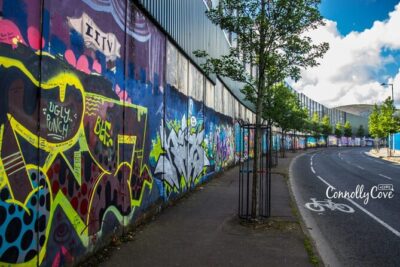
City Sightseeing Belfast Hop-On Hop-Off Bus Tour
See the full review →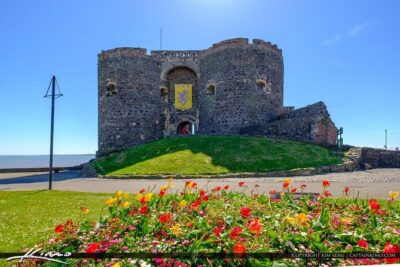
Giants Causeway & Castles Tour from Belfast: Guided tour
See the full review →Browse the lists this tour appears in